
-
Pin it, Sketch it!

Printmaking Patterns (Part 1)
On of the most important things that a design should always do is learn to research for a particular design. It should be an innate habit to create your own personal mood-board for whatever design project that you decide to embark on. This time the adventure was deemed for two things – (1) as a demonstration to students on application of printmaking methods for one of their course topics, and (2) as an exploration into a mass production of greeting cards.
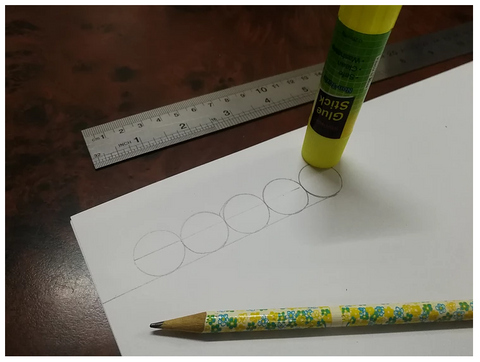
To kick-start my latest attempt, I started off with some simple researching on Pinterest (Click here to view my board). As the initial plan was to collect some samples for my teaching material, this slowly became an inspiration for a new project and the plan…. Let’s make some greeting cards using lino-print and ornamental calligraphy. Now that’s a cool plan.
So after gathering some references…. Let the sketching begin!
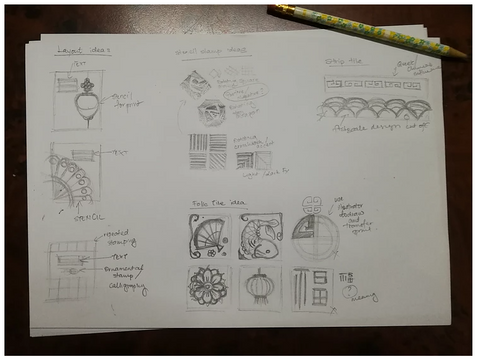
(Above) I planning to attempt a repeated pattern/ tile pattern with stencil effect. So based on some of the references, I sketched a rough layout for my stencil design and with the rough. Then I moved on to designing some tile designs. (Bottom) Some that can be transferred directly onto the linoleum and some that required Adobe Illustrator for more precision drawing.
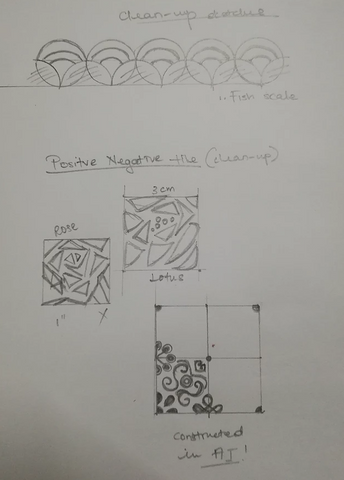
Working with AI is just as fun as drawing it however, for a more precise size and cleaner-look, I’d personally dub this as a cheat-method! As the tools used are the simple drawing tools of lines and shapes, and with the help of mask, pathfinder and the wonderful reflect/rotate tools. (Yes it only took me 15 minutes to create what I did, perhaps even lesser should I have used a mouse. haha…)

Next step is simply to print and transfer it onto the lino that is ready to be cut!
Stay tune for Part 2 to see how I transfer and eventually move into printing it~
#art #fineart #printmaking #designprinciplespattern #designprinciples #chinesenewyear2018 #designinspirations #adobeillustrator #illustratortricks #linocut
#printingstories
-
Expressing Emotions
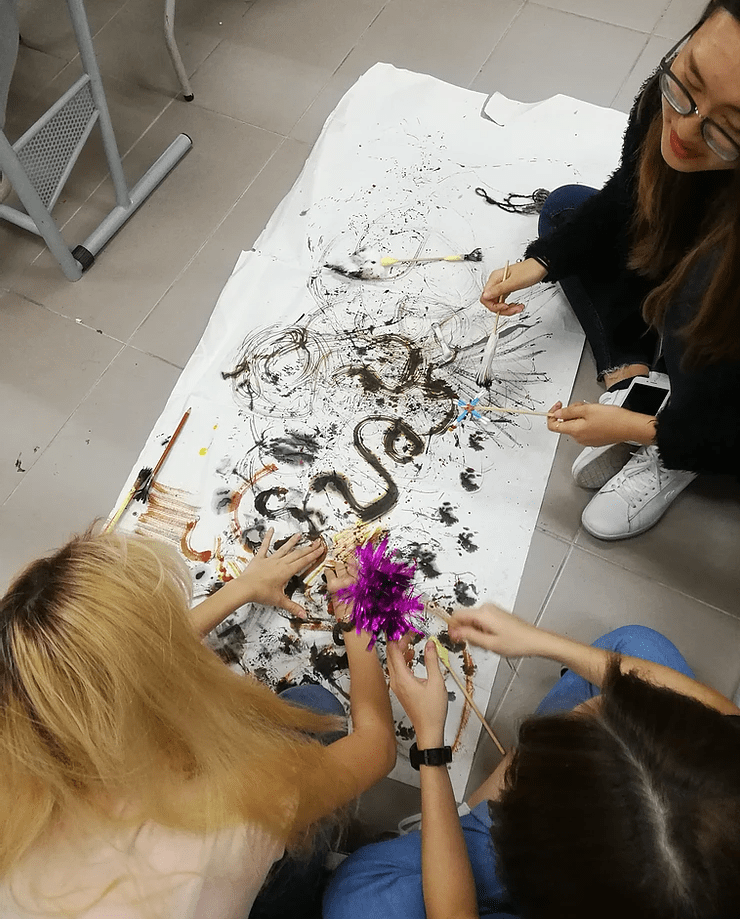
Getting art students to break out of the box has always been a challenge. Hence, the task was to “not think and describe a line with emotions”.
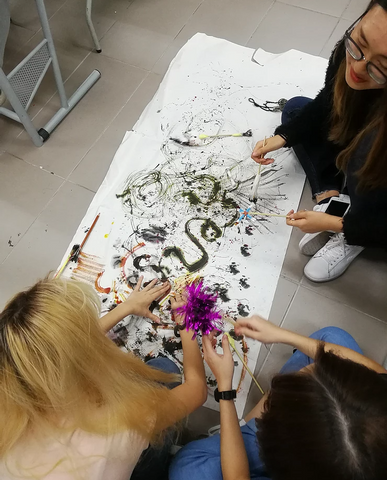
So how does one describe a line without drawing a line?
(Below) You start of by designing your own tools in replacement of using the traditional flat and watercolor brushes. And then, just draw, splatter, splash etc. till you feel as though you have expressed your thoughts.

And you keep exploring and trying out new strokes and new effects. This is one of the methods used to discovering new ideas and exploring new techniques to painting.
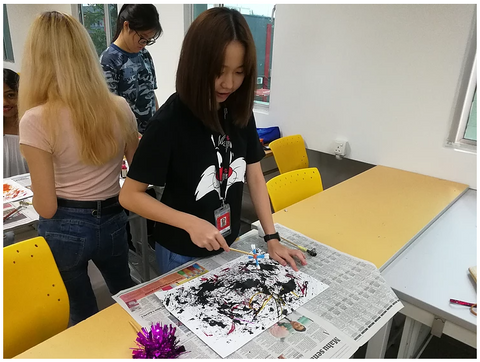
If you are interested in trying it out, have a look at Jackson Pollock’s works to get inspired.
#abstractart #arttherapy #markmakingart
-
A Visit to the Royal Delft
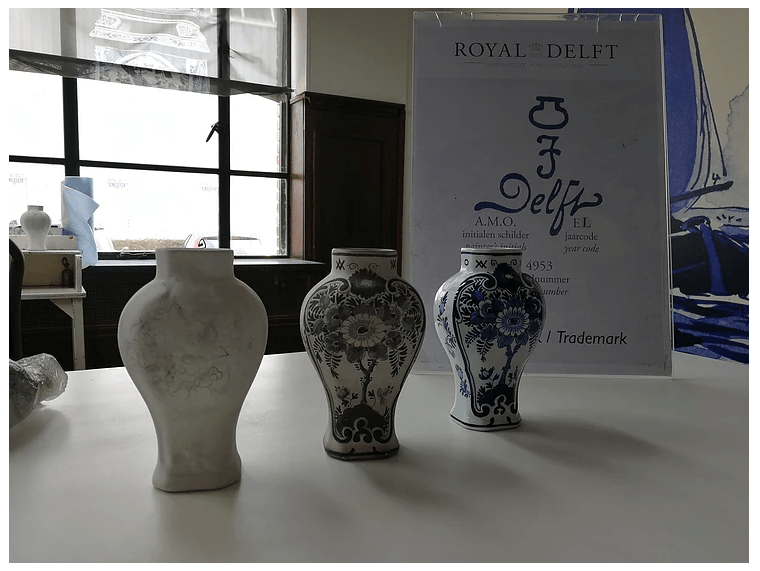
In my last travels in August ’17, I was lucky to have joined into one of the local tours to the Royal Delft factory in Delft, Netherlands. Its truly amazing to see how something very Asian has become an icon in Europe. The tour itself covered several places of the Netherlands – Rotterdam, Den Haag, Delft and Madurodam (The Netherlands Miniature Theme Park). However, this post will be focused on how the infamous Blue China is produced at the Royal Delft.

This image above is a good example of how the blue China effect is achieved. First, the object (in this case, the vase) is properly smooth all around then using a transparent sheet, the design is placed against the object and stenciled upon with a piece of charcoal. This stenciled design is later painted over using a type of blue pigment called cobalt oxide. The image below is of one of their artist demonstrating how to paint on to a figure.
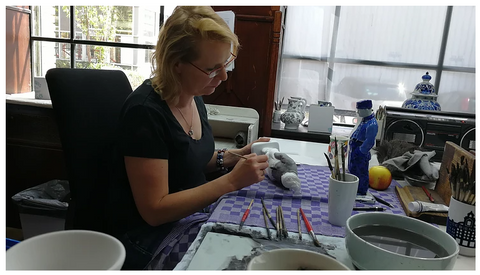
Once the object is ready, it is dipped into a glaze and left to set before being put into the kiln for firing.
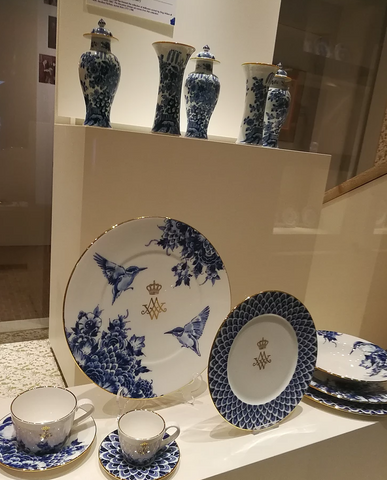
A finished Blue Delft looks like the above! (Below) Look at the collection of plates created specially for each Christmas.

The influences of this art is not confined to the pottery and tiles but it has also inspired the fashion industry.

(Above) A local Fashion Design student, Tess Van Zalinge took the icon to a new level by applying it onto her garments. The guide mentioned that she spent several months at the Royal Delft to complete her research and for her fashion show, the factory contributed broken earthenware (below) to decor the runway.
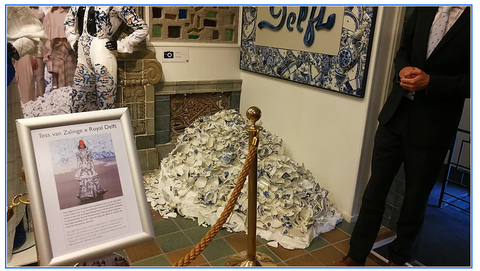
This is one of the many fascinating things of how history and culture of the East has in fact inspired the West.
Before I end this post, for those who are interested in pursuing a career as an artist at the Royal Delft; in total, you will need to spend at least 10 years before you will be able to have your own design and signature on the shelves!
#bluechina #paintingonplates #royalbluedelft #traveltoamsterdam #travelandlearn #art #craftings #historyofnetherlands
-
A new beginning
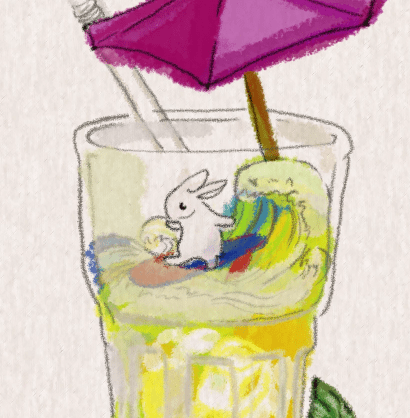
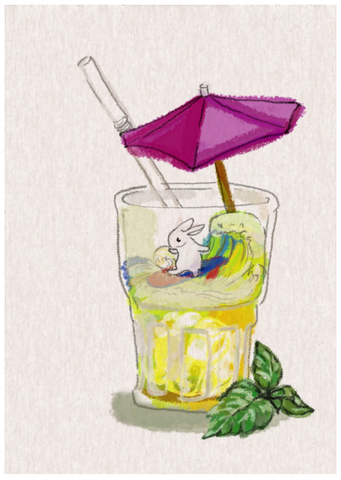
I have never been one to do a blogging site and share on the experimentation or explorations done in the fields of art. However in the light of the new year, it has been a resolution to change that and share something old and something new.
To start off, I will share something new before the week ends.
Till then~
recent posts
- Medjugorje, where Heaven touched Earth: Echoes of a Pilgrim’s Soul
- SS15: A Food Culture Timeline Told in Sips, Bites & Fads
- Teaching Creativity: How Genre Assignments Shape Storytelling Skills in Multimedia Students
- How REXKL Transforms Art Through Cutting-Edge Technology
- An Art Symphony: Exploring the World of Classical Art Through Immersive Design | TAPE Magazine
 Beamuse Designs