-
Zadar, Croatia: the Treasure Trove of Timeless Wonders

Echoes of a Pilgrim Soul, Part 2
Nestled along Croatia’s Dalmatian Coast, the historic city of Zadar is a treasure trove of ancient wonders and architectural marvels. My recent journey through the Old City of Zadar was nothing short of inspiring, as I wandered through its enchanting streets, brimming with history and culture. That said, this entry encapsulates my profound admiration for how the city preserves its past while embracing the present—particularly through the majestic Roman ruins, the stunning Romanesque churches of St. Anastasia and St. Simeon, and the mystical musical charm of the man-made Sea Organ. As we walk through this historic city, I could not hold back my passion for Art History, and as such, this entry will also feature glimpses of my travel sketches.
But before the beauty of Zadar revealed itself, there was the journey.

The 5am sky before boarding our bus towards Zadar. We set off early that morning—too early for chatter, but just right for wonder. It was still dark when we bid a temporary farewell to our homestay in Medjugorje, bundled into the bus with groggy eyes and layered scarves. The streets of Herzegovina were quiet at 5am, save for the occasional dog trotting across the road or the flicker of a lone light in someone’s kitchen window. Our journey wound through the hilly curves of the Herzegovinian countryside before we reached the border. Passports were checked, the bus hummed softly, and then—just like that—we crossed into Croatia.

The shift in scenery was immediate. The rugged, lived-in charm of Bosnia gave way to Croatia’s clean-lined modernity. Sleek highways stretched ahead of us like ribbons, and to our right, the coastline began to appear in glimpses. The morning sun rose gently, brushing the landscape with gold. It didn’t rush its entrance—just like most things on this trip, it arrived exactly when it was meant to.

While I sip my cuppa, lemme do some graphic and layout observations. Somewhere along that long stretch, our driver pulled into a rest stop. The air was crisp, the sky soft, and the coffee warm. We stretched our legs and stood around sipping our morning cups in the cool silence—half pilgrim, half traveller, fully alive in the in-between.
As we drew closer to Zadar, the highway began to reveal her coastal beauty. The buildings grew brighter, the skies bluer, and the Adriatic sparkled beside us like a sheet of glass set aflame by the morning sun. I sat quietly for most of the ride, taking in the view (and napping along the route) —Croatia’s coastal towns have a way of sneaking up on you, quietly majestic and altogether timeless.

The window display certainly captured my eye as it speaks of my inner thoughts when visiting new and old places alike. Our bus eventually came to a gentle stop near an entrance of the Old City. There, we were greeted by our local guide—a lovely woman whose name, regrettably, has slipped from my memory, but whose spirit and knowledge remain etched in my mind. She would lead us through Zadar’s historical arteries, walking us down cobblestone paths lined with Roman fragments, under weathered archways, and into the sacred silence of centuries-old churches.

My illustrated map of our walking your through the Old City. To me, it was not just a tour. It was a slow, reverent walk through the pages of Christian history. The Jesuits, Franciscans, Dominicans and perhaps the Benedictines had once left their imprint here, bringing with them not only their faith but a deep devotion to sacred art and architecture. As she spoke, our guide brought to life the elegance of Romanesque domes, the whisper of Baroque and Gothic embellishments, and the enduring heart of the city’s spiritual heritage in Greek, Roman and Byzantine artistry.
Highlights of our Day in Zadar From here, we began our walking tour through Zadar’s Old City, a route now lovingly documented in my sketchbook—complete with cobbled alleys, photographic snippets, and watercolour impressions still drying under the sea breeze.

Our tour began where many pilgrims would find comfort—at the Church of Our Lady of Good Health (Crkva Gospe od Zdravlja). Her entry doorway greeted us quietly, a reminder of both sanctuary and tradition. This was a Church embued with a mix of old and new. An architectural statement with a story to tell.
The name of this Church attributes from the venerated painting of Our Lady that hangs in the sanctuary, painted by Blaž Jurjev in 1447. However its miracles began to be noted from the later part of the 16th century. These ranged from plagues to natural disasters that befell the people of this town.

Church of Our Lady of Good Health, Zadar. Built in 1582. 
Walking into the Church. 
New part of the Church. Baroque-style that was added to the existing Rotundain the early 18th century. 
The older part of the Church that was built to during the Renaissance period. The circular building is referred as a Rotunda. 
THAT THE TEMPLE AND CITIZENS WERE SAVED FROM LIGHTNING BY THE VIRGIN JADERA, WE REJOICE WITH GRATIFUL PATRONAGE – SEPTEMBER 12, 1752
(Translated from Ancient Greek)In the first half of the 18th century, a Baroque-style single-nave church was added to the Renaissance rotunda, and a belfry with a bulb-shaped roof was built at the back of the circular building.
AymoCha! Croatia Travel GuideAs we ventured into one of Zadar’s narrower alleys, we came across a hidden gem—a Venetian fresco, unlike any I’d seen before. While traditional frescoes are painted directly onto plaster while it’s still wet, allowing pigment to bond with the surface, this one took a different approach. It had been painted onto tiles, then mounted onto the wall to imitate a window—a sacred glimpse into another time.
At the centre was Our Lady, serene and graceful, holding the infant Jesus close. Flanking them on either side were two saints—silent witnesses to the divine. The entire piece was framed as though inviting you to peer in through time, as if it were a sacred window opening outward from the past where we would be able to view the Adriatic Sea.

However it was not the technique that struck me hard but the devotion, reverence, and importance of Sacred Images that the Croats held deeply to their hearts.
Trotting on the alleyway, we were approaching our next stop along our walk – Monastery of St. Francis of Assisi (Samostan sv. Franje Asiškog), quietly majestic in its stillness. The oldest Gothic church in Dalmatia, it holds within its walls a deep sense of simplicity—Franciscan in spirit, no doubt—but also a quiet grandeur that speaks to its age and purpose. There was something gentle here. A kind of peace that didn’t demand attention but wrapped itself around you like a soft morning light.

The simple yet majestic entrance to the Monastery of St. Francis of Assisi 
A quiet portrait of Leopold Mandić — a life devoted not to grandeur, but to listening, healing, and the grace found in small, unseen acts. 
Pilgrims admiring the beauty of the Chapel within the Monastery 


Somewhere along our walk, the city opened up to the sea. And with it, came a sound I had never quite heard before.
The Sea Organ of Zadar does not perform in the way we expect music to. There are no musicians, no instruments in sight — only a series of steps descending into the Adriatic, and beneath them, a hidden system of pipes. As the waves move in and out, they push air through these pipes, producing tones that are at once haunting and gentle.
It was not music that demanded attention.
It was music that found you.We stood there for a while — not speaking, not moving much — just listening. The rhythm was irregular, shaped entirely by the sea. Some notes lingered. Others disappeared as quickly as they came. It felt less like a performance, and more like a conversation between nature and design.
And in that moment, it struck me — this too was a form of seeing.
Not through the eyes, but through attention. Through presence.

(Above) Taking a moment to admire for study of Graphic Design. (Below) Being a coastal city, the cats are pretty much the main characters around. From the openness of the sea, we returned once more into the city — into its narrower streets, its quieter corners, its sacred interiors.
Walking into the Church of Simeon Our steps led us to the Church of St. Simeon, a space that did not announce itself loudly, but held its presence with quiet dignity. There was a stillness here, one that gently asked you to slow down. To lower your voice. To notice.

Illustrated with watercolour once again in my little travel log. Inside, the light was softer. Time felt less urgent.
And then, tucked within the space, I found myself drawn to something smaller.

At the Main Altar, the casket that holds the Saint is exposed for pilgrims to pay homage. It was not imposing, nor elaborately adorned. Yet there was a quiet weight to it — not physical, but symbolic. The shape, the material, the way it stood within the space… it invited pause.

Baptism, after all, is not just ritual. It is passage. A crossing from one state into another. Standing before it, I couldn’t help but reflect on how often we overlook these quiet thresholds in our own lives — the moments that do not announce themselves as significant, yet change us nonetheless.
Perhaps that is what Zadar offered me. Not spectacle, but stillness. And yet, like all good journeys, it did not end in silence.
Our day gently closed just outside the very walls that had held our quiet reflections — with a table set, laughter returning, and a sumptuous seafood meal shared in good company. Fresh, simple, and deeply satisfying, it was a reminder of one of Croatia’s many blessings: life by the coast, where the sea does not only sing — it nourishes.

Honestly, one can never get enough of the freshness from the sea. There was something beautifully human about that transition.
From stillness to conversation.
From reflection to shared joy.This part of the journey rests not just in what was seen or heard, but in what we experienced together. Now, in 2026, I look back on the 2024 journey. It makes me smile at how long some reflections take to reach the page.
The next entry will take us further along this path. Hopefully, it won’t be years in the making. Our destination is Church of St. Elijah, where the quiet beauty of Our Lady of Grace awaits.
An unforgettable presence. One I am ready to revisit — this time, with clearer eyes.
-
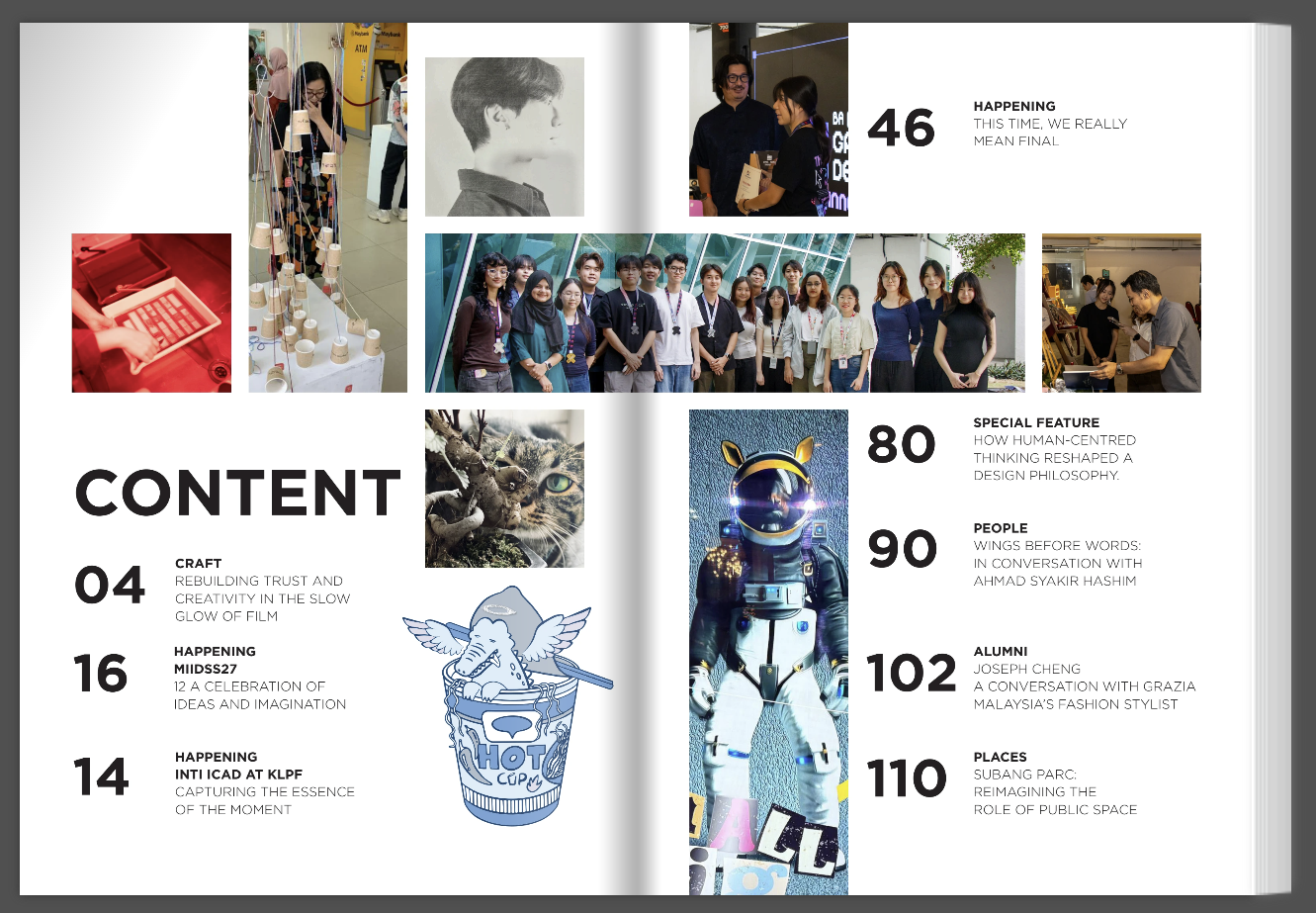
Between Pages and Practice with TAPE’s December Issue

“A journey of a thousand miles begins with a single step.”
Lao TzuPersonally, some conversations don’t start with questions.
They call for attention for a profound sense of observation and a quiet focus, coupled with the determination to engage deeply with a body of work until it reveals its insights. Much like that critical first step, wherein creative practice asserts itself subtly. It unfolds steadily, purposefully, and often in ways that become clear only when we think back on the journey.
The December 2025 issue of TAPE Magazine carries this sensibility throughout her pages. It is more than a compilation of features. It reads as a collection of lived practices. Each contributor offers not just finished work. They give glimpses into the process, intention, and the thinking that shapes it.
It is, in many ways, less about showcasing, and more about inviting readers into the conversations behind the work.

(above) Syakir posing alongside his sculptural masterpieces. Source: The Star Malaysia Among the highlights of this issue is a conversation with Malaysian artist and ICAD lecturer Ahmad Syakir Hashim. I am humbled to have been given the opportunity to gain some insight into his solo exhibition Wings Before Words, which reflects a practice grounded in material, meaning, and quiet resilience.
“I stop when it just feels right.”
Encountering his work is not immediate. It asks for time — for stillness — for a willingness to engage without the need for instant clarity. In speaking with him, what became evident was not just the work itself, but the rhythm of his process.
“The organic forms symbolise intuition.
The geometric structures symbolise the mind.”At times, the conversation felt less like an interview and more like an unfolding to something more innate to the soul.
As he shares there were moments where process took precedence over outcome.
Where uncertainty was not something to resolve, but something to work through.
Where meaning revealed itself gradually, through making.And that is what stayed with me most.
Not a single statement or answer, but the reminder that creative practice does not always need to declare itself. Sometimes, it exists quietly — in fragments, in gestures, in the persistence of returning to the work.
Yet to focus solely on one conversation would be to miss the larger rhythm of the issue.
Because what makes this edition of TAPE compelling is precisely its plurality.
Across its pages, one would see a rich landscape unfold.
There is the August Graduation Showcase, where final works navigate themes of food, identity, and immersive storytelling, each project reflecting not just technical ability, but personal voice. And then, there are moments from Muse & ICAD Day, where collaboration and interdisciplinary exchange take center stage. Furthering along it features from the Kuala Lumpur Photography Festival (KLPF), where lecturers step into the light of creative exploration through the lens.
The issue also celebrates recognition and industry engagement. As we shift the spotlight to students featured in the KANCIL Awards 2025. And, not forgetting the speculative and narrative-driven explorations within MIIDSS27:12, where ideas are allowed to stretch beyond the expected.
Elsewhere, voices continue to emerge through alumni and live industry experiences as there is an interview with BFMC graduate Joseph from Grazia, and the BFMC × INTI CHANGE: NOX live project, where students take on the role of managing a diploma fashion show as part of their coursework.
Threaded quietly within these pages are also smaller, personal contributions — moments of seeing, capturing, and documenting. Among them, one of my own photographic works finds its place at KLPF, a small but meaningful reminder that creative practice often exists not just in large gestures, but in attentive observation.
Together, these features do not compete for attention.
They coexist.Some grounded in craft.
Others in experimentation.
Some reflective.
Others exploratory.And in doing so, they form a collective ecosystem — one that reflects not just individual practices, but a shared commitment to making, questioning, and evolving.
There is something generous about that.
A willingness to share process.
To reveal uncertainty.
To document growth without needing to perfect it.In a time where much of what we encounter is curated for immediacy and impact, TAPE offers something quieter — and perhaps more enduring. It slows the reader down. It asks you to linger. To return. To reconsider.
Not just what is being made, but how and why it comes into being.
For those who have followed the work emerging from ICAD, this issue feels like a natural extension. For those encountering it for the first time, it offers an entry point — not into a single narrative, but into many.
And that, perhaps, is the point.
If one conversation draws you in, the rest of the issue invites you to stay.
So take your time with it.
Flip through the pages, allowing the words to ignite your imagination. Spend time with a piece longer than usual, feeling its rhythm connect with you as each sentence reveals a story.
Reflect on a memorable paragraph, appreciating its details and the emotions it evokes, while considering its deeper meanings.
Because somewhere between the pages and the practices, you may find not just inspiration — but recognition.
-
The Art of Seeing: Translating Illusion into Space

After stepping into illusion with our visit to the Museum of Illusions (in the last post), the question that lingered was simple: what happens next?
Seeing, after all, is only the beginning.
In the weeks that followed, my foundation students were invited to take what they had encountered – the fragments of distortion, warped perspectives, mirrored realities, and begin the process of translation. Not as a replication, but interpretation in their own metaphorical mening. Not copying what was seen, but understanding how it was seen, and more importantly, why it felt the way it did.
What emerged was far from uniform.
Some students leaned into the mechanics of illusion as their source of inspiration. They explored mirrors, perspective tricks, and spatial distortions — attempting to reconstruct environments that confused the eye and disrupted logic. Their works were grounded in observation, almost analytical in nature, as if decoding the visual language behind illusion itself.
Others, however, took a different route.
Instead of stubbornly attempting to use
surrealism for purposes of subversion, it is
necessary to try to make of surrealism
something as solid, complete and classic
as the works of museums– Salvador Dali
They stepped into the surreal. Illusion became metaphor. Spaces began to reflect internal states — emotions, tensions, fragments of thought. These were not just rooms or environments, but interpretations of feeling, translated into form. Quietly expressive, sometimes ambiguous, yet deeply personal.

Students’ curating their own works by themes for display This divergence was perhaps the most telling outcome. Because design, at its core, is never just about what is seen — but how it is understood.
The first stage of translation began digitally. Students constructed their ideas in isometric space using Photoshop — flattening perspective, organising structure, and making sense of spatial relationships.

Isometric works completed in Photoshop by the students. What illusion once disrupted, they now had to rationalise. It was a shift from instinct to intention.
From there, the work moved off the screen.
Each student developed a 20 × 20 × 20 cm spatial piece, built entirely from scratch. Materials were not prescribed — and that freedom led to some of the most inventive outcomes. Soft and hard air-dry clay formed the base of many structures. Some experimented further — using nail polish to create pearl-like finishes, or transforming simple tart foil cups into clamshell elements. Everyday materials were reimagined, not for what they were, but for what they could become.
A glimpse into the design process of May P. K. (ICAD’s Foundation in Design Semester 2) What began as observation slowly took shape as experience. And then, for a change, the work did not end at submission. Instead, it moved outward.
The final presentations were staged just outside the ICAD office, within a small exhibition space that the students were given full responsibility to occupy. Pedestals were arranged. Boards were set up to showcase process work alongside final pieces. The space, modest as it was, transformed into a curated environment — one that invited viewers to walk, pause, and observe.

Amidst chaos, they are plotting their exhibit and experiences Students were no longer just presenting.
They were exhibiting.Placed side by side, the works began to speak to one another. Optical explorations sat alongside surreal interpretations. Structured illusions contrasted with expressive spaces. What might have been individual assignments became a collective conversation — a quiet dialogue on perception, interpretation, and form.

In many ways, this final stage mattered most.
Because learning does not end with making. It extends into how work is positioned, experienced, and shared. To see one’s work on a pedestal, outside the classroom, is to understand that design exists beyond assessment. It exists in space. It exists in dialogue.And perhaps that is the true continuation of learning to see.
Not just through the eyes, but through making, reflecting, and placing one’s work into the world.
-
Stepping into Illusion: A Treat and a Study

“All it takes to uncover hidden gems is a clear eye, an open mind, and willingness to search for inspiration in places other people aren’t willing or able to go” – Austin Kleon
Tucked quietly away from the bustle of Starhill and the relentless pace of Kuala Lumpur’s Golden Triangle sits Museum of Illusions — a space that at first glance feels like a playful diversion, but on closer encounter reveals itself as something far more layered.

“The changing scale and prespective in the exhibits made the space feel unstable. […] I can explore how lighting and shadow can play a role in space and […] explore how everyday objects can be arranged to create optical illusions” – Kok LL, Foundation in Design When I first stepped in, I was both amused and curious. Amused by the cleverness of the installations, and curious — almost suspicious — of the scale. Compared to a much earlier visit to the Museum of Illusions in Penang years ago, this one felt noticeably smaller. And yet, that very sensation became the first illusion of the day. How could a space feel compact and expansive at the same time?
Even the room itself seemed to be playing tricks.
That was when it clicked: the experience begins before you even start looking.
“This visit helped me realise that the same space can be perceived very differently depending on the viewing angle. […] This demonstrated the strong impact of scale and proportion in creating visual Illusions.” – L Seng Aung, Foundation in Design For many visitors, the Museum of Illusions reads as a fun, Instagram-friendly attraction — mirrors, distortions, impossible spaces. But for me, it immediately suggested something else: a living classroom. Or better yet, a flip classroom — one where perception leads, and reflection follows.
Walking through the exhibits, I couldn’t help but think of Optical Art, particularly the work of Bridget Riley. Her Movement in Squares came to mind almost instantly — that relentless push and pull of black and white, the tension between flatness and movement, the way vision becomes unstable the longer you look. And there it was, quite literally, printed among the exhibits. For a moment, my inner art-history nerd had a small but very real victory.
Beyond named references, what stood out was how effectively the museum uses contrast, repetition, mirrors, and spatial manipulation to disorient and reorient the viewer. This is Op Art in experiential form. Illusion not as trickery, but as inquiry.Which is exactly why I decided to take my students there.
The decision, truthfully, was a bit of a gamble. I hadn’t visited this particular outlet before, and I went in with crossed fingers, hoping it would echo the richness of my Penang experience from nearly a decade ago. But the risk paid off — not because the museum delivered answers, but because it provoked questions.
For students, the shift from screen-based viewing to physical engagement was immediate. Rather than merely seeing illusions, they experienced them. Some described feeling dizzy as colours and patterns disrupted their sense of balance. Others felt oddly watched, unsettled by reflections that refused to behave. And a few didn’t want to leave at all — fascinated by a kind of visual language they had never encountered in person.
“In animation, still images shown quickly create the illusion of movement. This experience inspires me to use perspective and camera angles more carefully in my future works.” – Liong ST, Diploma in Digital Media Design
What mattered wasn’t just reaction, but translation.
Instead of treating the visit as passive observation, students were given different ways of responding.One group was asked to connect their discoveries back to topics in the History of Animation, particularly the idea of persistence of vision — how motion emerges from stillness, how repetition constructs meaning. Another group was tasked to observe, collect, and decode their experiences, returning to class with sketches of imagined spaces, translated into isometric form.
Thoughts become things. If you see it in your mind, you will hold it in your hand.
– Bob ProctorSeeing became thinking.
Thinking became making.In this sense, the Museum of Illusions operates as more than a novelty. It becomes a reminder that perception is embodied — that what we feel, notice, and experience physically cannot be replicated through a screen alone. YouTube clips and social media snippets flatten what is, in reality, a deeply sensory encounter.

“Perspective and spatial layout played a key role in shaping my experience. […] Thi showed me that space can guide movement and directly control how people experience it.” – Thuta Z. Foundation in Design And this ties closely to my own teaching intention. As much as I embrace advanced technologies — from digital tools to AI-assisted workflows — my aim has always been to keep learning human-centred. Technology can support execution, but it cannot replace lived experience. It cannot feel disorientation. It cannot register surprise. It cannot interpret meaning without us feeding it intention.
“Animators use movements, prespective, lighting, and repeated images to make our eyes see motion and space. This visit inspired me to think kore creatively about how visuals can affect the way people see things. […] I hope to learn and use these ideas in my animation or design work to create more fun and interesting visuals.” – Leong XX, Diploma in Digital Media Design
It takes two to tango.
That’s why spaces like the Museum of Illusions matter. They invite us to step outside, to engage our senses, to be slightly uncomfortable, slightly amused, and fully present. They remind students — and educators — that learning doesn’t only happen at desks or behind screens.

Students gathered near the entrance as they were briefed on the interactivity of the space. And perhaps the most important takeaway was this: not everything has to be serious to be meaningful.
Sometimes, learning begins with curiosity. With laughter. With a willingness to be fooled.
So if you find yourself navigating the crowded streets of Bukit Bintang and need a brief escape — whether as a designer, educator, student, or simply a curious human — step inside. Go with an open mind. Look again. Bring a friend. Or better yet, bring the whole village.Treat it as play.
Treat it as study.
More often than not, the two are inseparable.
Students of the Foundation in Design and Diploma in Digital Media Design. -
Before Tools, Before AI, Before Output: Learning to See Again

Before software.
Before prompts.
Before output.
There is seeing.As a new academic year begins, I’ve found myself returning to a quieter question — not what students should make, but how they learn to notice. In a creative landscape increasingly defined by speed, automation, and instant visual results, the ability to slow down and observe has quietly become a radical skill.
Seeing, after all, is not passive.
It is trained.
It is practised.
It is disciplined.This belief surfaced clearly during the opening weeks of History of Animation, where we deliberately stepped away from screens and returned to fundamentals. Instead of beginning with digital tools or animation software, students were asked to build their own phenakistoscope — one of the earliest devices to demonstrate the principle of persistence of vision.

Paper.
Cutting tools.
Markers.
Movement.
Nothing more.In constructing these simple optical toys, students weren’t just recreating history. They were learning to observe motion frame by frame — to understand how still images gain life through sequence, timing, and rhythm. There was no undo button. No playback scrubber. Every decision had weight.


The lesson culminated in a flipbook challenge, where students were tasked to apply what they had learned independently over the following week. The brief was intentionally modest: create a short frame-by-frame animation, then return to share the process, the outcome, and a reflection on what worked — and what didn’t.
What mattered wasn’t polish. It was awareness.
I think this activity was really fun! The hardest part for me while making the flip book was making sure that every object stayed in the same place and kept the same shape in each frame. — Xuan Xuan
Through this exercise, students experienced animation not as spectacle, but as construction. They began to grasp that motion is built incrementally, that meaning emerges through repetition, and that attention to small changes is what makes movement believable. In other words, they learned to see before they learned to produce.

Execution time This early encounter with persistence of vision does more than introduce animation history. It lays a conceptual foundation for what comes next — 2D animation, 3D animation, motion graphics. Long before timelines and keyframes enter the picture, students develop a felt understanding of how motion works, and why every frame matters.
And this is where my personal teaching aim becomes clear.
I havent fully understood how to make animations look smooth and the timing is hard which made it looked crooked. I underestimated how little paper was used as well, I wish I could do more. –Catherin L. The inclusion of advanced technology — from industry software to AI-assisted tools — is not something I resist. It is something I plan for. But alongside these developments, my intention has been to ensure that students experience learning in a humanistic way — one that prioritises perception, judgement, empathy, and embodied understanding.
Technology may accelerate execution, but it cannot replace experience. Tools may generate options, but they cannot teach discernment.

Student here was counting was arranging her stack after realising the importance of numbering. By grounding students early in analogue, sensory-based exploration, they are better prepared to engage with advanced tools thoughtfully rather than dependently. They learn not just how to use technology, but when and why it should be used.
Before tools shape outcomes, perception shapes intention. Before automation accelerates production, observation grounds judgement.
Before AI assists creation, attention gives it meaning.
When students learn to see — truly see — they don’t just become better animators. They become more thoughtful designers. They understand that making is not a race toward results, but a process of noticing, adjusting, and responding.
This is not nostalgia for analogue methods, nor resistance to technology. It is a commitment to balance. In an age of increasingly powerful tools, the most important thing we can offer students is not speed, but clarity.
January 2026, now, feels like the right moment to pause here.
- To re-centre on perception.
- To value attention as a creative discipline.
- To remember that before we ask students to produce, we must first teach them to observe.
The applications will come. The tools will follow. The outputs will arrive in time.
But first, we learn to see again.
-
A Library That Never Sleeps: The BookXcess Experience at Sunway Square

Some spaces whisper. Others hum.
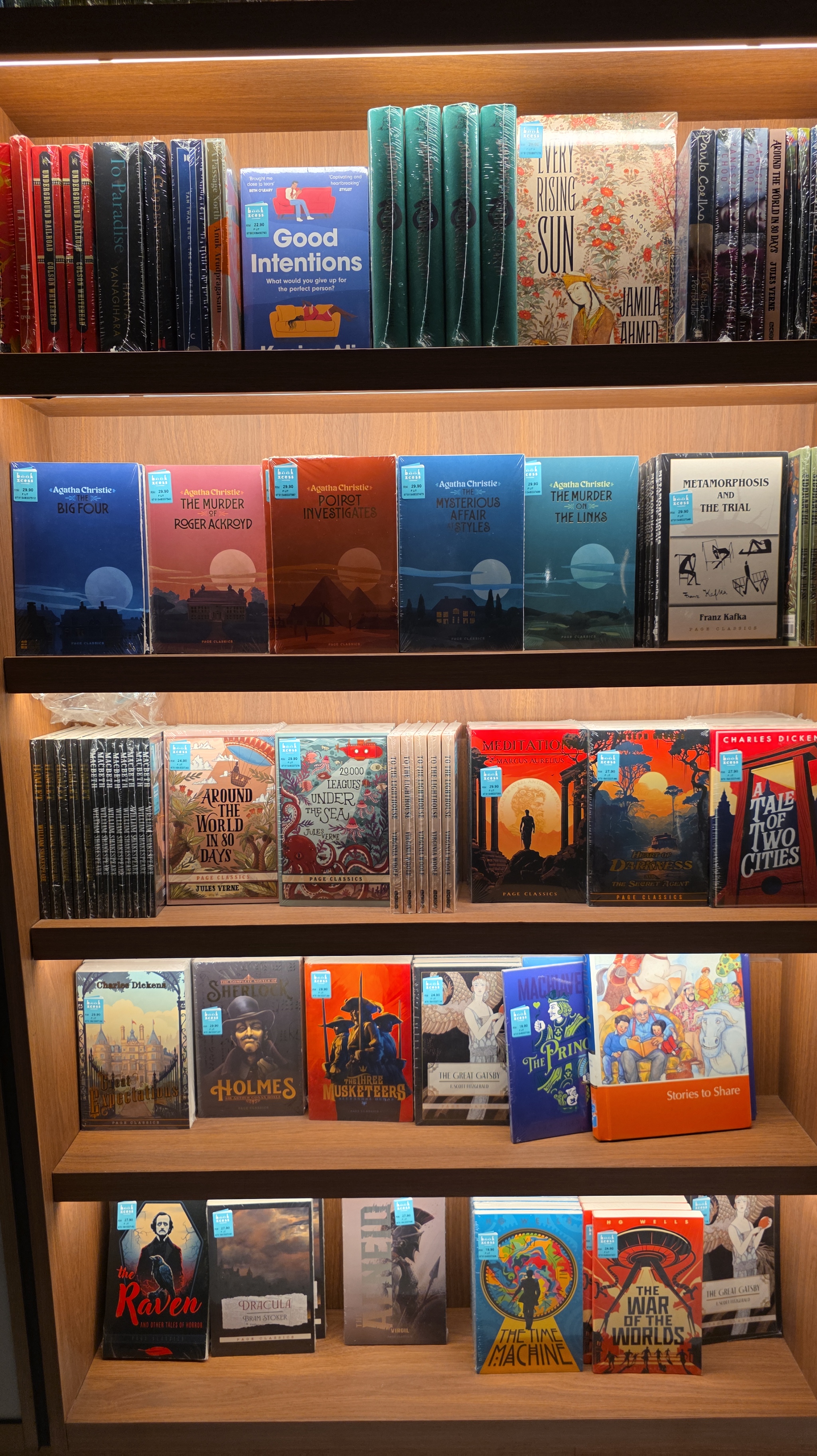
And then there are places like The Library by BookXcess — which practically sing to anyone who has ever loved the smell of paper, the weight of a book, or the quiet thrill of getting lost between shelves.
People should be interested in books, not their authors.
– Agatha ChristieI visited a few days after its official opening, right after the TikTok hype wave crested in December. I went with a couple of friends, half-curious, half-sceptical — and entirely unprepared for how cinematic the experience would feel. Walking in, the first thing that hits you isn’t just scale, but atmosphere. Floating books hover overhead like a suspended spell. Light pools softly between aisles. For a moment, you don’t feel like a shopper — you feel like Belle stepping into that library scene, minus the singing teapots.

Near the entrance of the store, choose your imaginative character – are you Belle or a student at Hogwarts? This is a 24-hour space, and that detail matters. It changes the mood entirely. There’s no rush, no closing-time anxiety. The shelves stretch confidently across fiction and non-fiction, inviting wandering rather than browsing. It feels intentional — like a place designed not just for consumption, but for lingering.
The layout deserves its own quiet applause. Sections are mapped with clarity, not chaos. And when the reading turns into thinking (or procrastination masquerading as thinking), you’ll find sustenance close at hand. Nestled right within the pages is Kenny Hills Bakery, holding the fort till midnight for night owls, creative insomniacs, and students convincing themselves that one more chapter counts as productivity.
For those who want to work — or at least look convincingly like they are — there’s a dedicated co-working-friendly zone. Students especially will appreciate this: a space that understands that ideas don’t always arrive politely between 9 and 5. Tucked discreetly nearby is Becon Stationery, ready to rescue you when inspiration strikes and you realise you’ve forgotten a pen. Or three.

Wander upstairs and the tempo slows again. Chairs overlook the quarry lake — and in a quietly clever design move, classic Monobloc chairs have been reimagined into gentle rocking seats. It’s oddly comforting, like being rocked into focus rather than sleep.
Then there are the delightful, almost blink-and-you-miss-it details: an electric upright piano for wandering fingers and impromptu musicality; a wall clearly meant for photography enthusiasts; another that feels like a quiet nod to art historians; and, tucked away with just enough swagger, a Harley for bike lovers to admire between chapters.

I couldn’t help but think of Tsutaya Books, which I visited not long ago. Tsutaya carries its own calm authority — refined, restrained, deeply contemplative. Its reading corners are fitted with two electric pianos, and the mood there leans towards meditative elegance. Coffee and cakes accompany hushed concentration; it’s a place that encourages inward reflection.

The Art enthusiasts wall that captivated my heart. BookXcess, by contrast, feels more exuberant. Where Tsutaya soothes, The Library energises. Where Tsutaya whispers, BookXcess hums — sometimes even grins. Both understand that books are more than objects; they’re experiences. They simply interpret that philosophy through different emotional registers.
Now that January has rolled in, the urge to return is strong — but this time alone. I’m picturing my own book, my reading journal (a Christmas gift from a dear friend), coffee in hand, thoughts spilling onto paper. Ideally without cake — because reality — but no promises.
Why This Place Matters to me
The Library by BookXcess isn’t just about books. It’s about belonging.
It understands that creativity doesn’t run on office hours, that learning isn’t linear, and that sometimes inspiration arrives at 3am with a cup of coffee and a view.

Reprints of famous and award winning photography to ponder a moment. For students, designers, writers, educators — and anyone who believes ideas deserve space and time — this is a sanctuary.
A bookstore.
A workspace.
A midnight refuge.And frankly? A dangerously good excuse to stay up too late.
Humor me for a second as I come to close my thoughts.
*Enters here in a voice imitating my favorite TV series – The Librarians (2014 – 2018)*
Welcome to The Library.
Bring time. You’ll lose track of it anyway. -
2025: Notes from a Year That Taught Me to Pause, Pivot, and Pay Attention

I didn’t plan 2025.
At least, not properly. In my to-be 40th year, I was still living with the motto – The plan is no plan!
I entered the year with lists, yes — projects, deadlines, exhibitions, classes to teach, students to shepherd across finish lines. But somewhere between January’s intentions and December’s quiet, the year stopped asking me to plan and started asking me to notice.
Notice what stayed.
Notice what tired me.
Notice what softened me in ways I didn’t expect.This was a year of studios and classrooms, of exhibitions and grad shows, of late nights that didn’t feel lonely and early mornings that felt earned. A year where creativity stopped being just output and started becoming conversation — with students, with colleagues, with myself.
Teaching in 2025 felt different. Not louder. Not bigger. Just sharper.

Closing the year with my favourite misfits AI entered the room — casually at first, then decisively — and instead of disrupting everything, it exposed everything. How we think. How we decide. How much we rely on habit instead of intention. The conversations weren’t about tools anymore; they were about judgement. About authorship. About why we make anything at all.
What surprised me most was this:
- The more automated things became, the more human teaching felt.
- Students didn’t need faster tools. They needed better questions.
And I found myself returning, again and again, to the same quiet insistence:
Slow down. Think. Choose.
Outside the classroom, 2025 unfolded like a collage.
There were exhibitions that reminded me why tactility matters. Why intuition still deserves space before explanation. There were graduate shows buzzing with nervous pride and raw honesty — students standing beside work that carried months of doubt, risk, and stubborn belief.There were places that felt like punctuation marks in the year.

Visit to the Library by Bookxcess at Sunway Putra A library that never sleeps. A gallery that asked for touch instead of distance. Studios that smelled like paper, glue, coffee, and ambition. These weren’t just venues — they were moods. They held time differently.
Personally, I felt myself shifting.
Not dramatically. Not with declarations.
But in the way I listened more than I spoke.
In how I chose depth over speed.
In how I allowed unfinished ideas to sit without panicking.
I stopped needing everything to resolve immediately.
I started trusting process — again.
Taking breaks to breathe and paint There were moments of exhaustion, yes. Of questioning. Of wondering if I was doing enough, or too much, or the wrong things entirely. But there was also an undercurrent of steadiness — the kind that comes from alignment rather than certainty.
If 2024 was about building,
2025 was about inhabiting.Inhabiting roles.
Inhabiting questions.
Inhabiting the in-between spaces where learning actually happens.And perhaps that’s what I’ll remember most about this year — not the milestones, but the moments of quiet clarity. The conversations that lingered. The projects that didn’t shout but stayed.
2025 didn’t hand me answers.
It handed me better instincts.And as 2025 closed, I don’t feel the urge to rush ahead. I feel the rare, satisfying sense of being here — reflective, curious, a little tired, and deeply grateful.
If the 2026 asks anything of me, I hope it’s this:
- To keep designing with intent.
- To keep teaching with empathy.
- To keep choosing meaning over momentum.
And to remember that not every year needs a grand thesis.

Cheers to a good year Some years are simply chapters that teach you how to read your own life more carefully.
-
Medjugorje, where Heaven touched Earth: Echoes of a Pilgrim’s Soul

**This is a delayed post and certainly something I should have done months ago…. especially since my last trip was on October 2024**
October 2019 was my first trip to Medjugorje, and quite frankly, I was unsure what to expect. Perhaps it was a great rojak mix of joy, gratefulness and possibly a certain fear of the unknown. Nonetheless, as we gathered at KLIA then, a Priest offered me a quiet piece of advice – he said, “Go without expectations. Don’t worry if you don’t experience what the others see; what you might experience may be different from them all.” I have held those words closely then and even now as I venture to other places as well. As let’s be honest about a few things, when it comes to visiting religious sites, it’s not always about the visions and wonders. Sometimes, it’s about finding stillness in yourself, and in your soul.

2019: I travelled with my little sketchbook then and illustrated the church in the quietness of the evening. The essential things in life are seen not with the eyes but with the heart.
Antoine de Saint-Exupéry
2024: I am back 5 years later and the still serenity calms me still. Coming forward to 2024, I was once again gripped with a quiet uncertainty about what lay ahead. My encounter from five years ago was not something I expected to replicate—neither the route nor the group I would be travelling with remained the same. So naturally, questions started to flood my thoughts. What would this journey hold for me now? One thing I knew for sure was that my experience would be deeply personal, and markedly different.
In 2019, our pilgrimage had coincided with the time of the month when Our Lady was said to appear publicly, and I remember how the whole town seemed to hold its breath in reverence. That year, I had the chance to wake up before dawn and make my way to Apparition Hill. We walked briskly in the cool quiet, long before the sun had stirred. At one point, I looked up—and was quietly stunned by how the stars above had arranged themselves into what looked like a celestial pathway. Not leading from us to heaven, but the other way around—as though heaven had gently laid a path down to earth. At the time, I didn’t think too much of it. But the next day, while visiting the Adoration Chapel, I came across a mosaic artwork. In it, the stars were arranged in just the same way, forming a divine bridge from the heavens to us. And that’s when I felt it: that moment had not been coincidence, but perhaps a quiet grace meant just for me.

Mosaic tilework from the Adoration Chapel at Mother’s Village was founded in 1993 by the late Father Slavko, during the war in the Balkans. Source: Medjugorje Center at Canada However, that was only the beginning. The true heart of the experience unfolded when we finally reached the Blue Cross at the base of Apparition Hill. It was already packed — pilgrims young and old, from every corner of the globe, clung to every available space. Just like Zacchaeus from the New Testament, some had even climbed up trees in hopes of catching a glimpse or simply being closer to the sacred moment.
And then, it happened.
When Our Lady appeared to the visionary, Mirjana Dragičević Soldo, an extraordinary silence fell upon the crowd — not the hush of a disciplined audience, but a deep, encompassing stillness, like creation itself holding its breath. Even a small bee that had been buzzing near me came to a halt in the air, hovering in quiet reverence, its tiny form turned toward the spot of the apparition.

2024: Climbing up the Hill for a short prayer at the Blue Cross. In that moment, time simply ceased to matter. I couldn’t tell you how long we stood there, wrapped in that sacred stillness. And just as gently as it had come, the moment lifted. When Our Lady’s message had been delivered and She departed, it felt as though the world exhaled — time resumed, the soft rustle of leaves returned, and life slowly stirred again. What I didn’t know then was that this moment would become even more precious in hindsight. As a few months later, in March 2020, Mirjana received a message that Our Lady would no longer appear to her publicly. It was quietly announced—no fanfare, no grand explanation—just a mother’s gentle farewell, for now.
Looking back, I believe it was a soft warning, a mother preparing her children for what was to come. Shortly after, the world shuttered its doors. Borders closed. Churches emptied. And Medjugorje, once alive with the footsteps of pilgrims, fell into a deep silence. But even as the apparitions to the public ceased, Our Lady did not abandon us. She continued to appear privately to the visionaries, reminding us that grace is not bound by places or crowds. Heaven had not turned its face away—it had simply entered a quieter season. To have been present at that final few public apparition, unknowingly standing on the edge of a new and uncertain chapter for the world, is something I still struggle to put into words.
I didn’t see Her. But I felt Her. And that, I’ve come to realise, is more than enough.
Digital watercolour painting that I had painted the night before we left Medjugorje to head home. App: Infinite Painter, Samsung S22 Ultra. Though our pilgrimage in 2024 took us further afield, Medjugorje remained our constant—a spiritual hearth we returned to each evening. Despite the years that had passed and the changes the world had weathered, Medjugorje itself seemed untouched by time. The streets still filled with pilgrims. The air still carried the hum of rosaries being prayed in every language. And St. James Church still stood as the beating heart of it all.
What struck me most was how little had changed. The queues for confession were still long, winding their way patiently toward the priest seated in persona Christi—each penitent carrying their own burdens and hope for mercy. It was almost enthralling, witnessing the quiet discipline of those waiting, day after day. There was something profoundly moving in it—the unseen heaviness of hearts being brought to the light, one soul at a time.

“Father, I have sinned…” a moment I was blessed to capture as I stood in line. The crowds at Mass never thinned. In fact, each evening as the Liturgy began, the plaza surrounding the church would fill in such a way that you’d pause and wonder where all these people had come from. And when Mass concluded, the dispersing throngs carried with them a kind of invisible thread—a shared experience that needed no words.

Mass followed by Holy Hour and Adoration. Medjugorje, as it turns out, remains as it always was: a place of encounter. A spiritual current still flows steadily here, whether one is seeking, grieving, or simply watching the stars. And even as we travelled outward to other cities, each return to this little town felt like stepping back into the embrace of something eternal.
This is just the beginning.
From Medjugorje’s sacred hills to the ancient streets of Zadar, Dubrovnik, and beyond—each stop carried a piece of grace, a whisper of something divine.
Echoes of a Pilgrim’s Soul continues in Part II. -
SS15: A Food Culture Timeline Told in Sips, Bites & Fads

An ode to 10 years at INTI and the ever-changing palate of Subang Jaya.
Ten years is a long time to stay in one place. But somehow, working in SS15—Subang Jaya’s mini metropolitan—never quite felt stagnant. Perhaps because the pavements, alleys, and shophouses around INTI always seemed to be in a state of flux. And more often than not, this transformation was led by food.
When I first started at INTI back in 2014, SS15 was mid-way through a café renaissance. It felt like overnight, every other lot was suddenly pouring “handcrafted” coffee, doling out thick-cut toast, and pairing latte art with raw concrete walls. Artisan cafes mushroomed, each one trying to be the next Instagram darling. It wasn’t just the caffeine—it was the clink of cutlery, the hum of coffee machines, and the soundtrack of lo-fi jazz. ASMR, though not yet a buzzword, was alive and well in the ambiance of these cafés.

Source: Google Images In-between classes and marking papers, I sipped my way through this golden era. But then came the froyo wave. Frozen yoghurt, or more endearingly, “Froyo”, exploded in popularity. Tutti Frutti was the pioneer of this chapter, letting patrons self-serve by the swirl and pay by the gram. It was yoghurt theatre at its finest. I happily jumped on that bandwagon, like many others, caught in the joy of toppings and tartness. But as with all trends, its reign was brief—melting away as quickly as it came.
Enter: the bubble tea boom. Now, this one had legs. It wasn’t new, of course—any pasar malam kid from the early 2000s would recall slurping on RM5 cups of chewy tapioca pearls. But in the mid-to-late 2010s, the drink rebranded. It became an experience. Names like The Alley, Gong Cha, Daboba, Xin Fu Tang, and Tealive turned boba into a lifestyle. The shops multiplied like mushrooms after rain. I remember walking down the street with a colleague, noticing yet another new outlet under renovation. Jokingly, I muttered, “I hope it’s not another bubble tea joint.” A man nearby—unbeknownst to us, the owner—overheard and asked why. I mentioned the saturation. Months later, the unit never opened. Coincidence? Perhaps. But we did count them, just for fun—27 bubble tea shops in one neighbourhood. A record of sorts.
Source: Google Images Somewhere between the froyo fade and boba takeover, the Morningwood Café opened its doors. A cheekily-named spot by Rueben Kang, Jared Lee, and Marianne Tan, Morningwood brought a youthful, creative charm to the café scene. It later changed hands many a times and was even a pasta joint before regaining a new life and being rebranded as Crackpots. Under new ownership, it became a favourite haunt of mine, thanks to its divine madeleines and exceptional coffee. The space evolved, much like SS15 itself. By late 2023, Crackpots relocated to USJ 1, and in its place now stands Lloyd’s Pizza, firing up slices where so many latte-fuelled afternoons once passed.
Post-pandemic, the tide turned again—this time towards wellness. Gen Z brought a new wave of health-conscious cafés and tea brands: Beautea, Koi Thé, and the ever-aesthetic Chagee ushered in an era of sugar-reduced, antioxidant-rich options. Aesthetic overdrive met functional beverages. Gone were the tapioca pearls; in came wolfberries and collagen jelly.
But SS15, ever the chameleon, wasn’t done yet. In 2023, something else started simmering—the Mee Tarik Cina Muslim craze. Pull noodles from the Chinese Muslim regions of China found a firm footing here. Their dishes were fragrant and hearty, but as a spice enthusiast, I must say the grilled skewers didn’t quite match up to the smoky charm of Balinese, British, or American marinades. Still, the novelty caught on.
Soon after, Nasi Lemak found itself in the limelight—again. Once a humble RM1.50 roadside staple, it became boutique. Fancy sambals, deluxe add-ons, and curated plating turned it into a premium dish. Shops began crafting an ambiance around it, leaning into vintage kopitiam vibes, while others went minimalist or rustic.
Then came the current chapter: hotpot. From China’s communal soup culture emerged Malatang—an entirely customisable broth experience where one selects their meats, veg, noodles, and condiments, all soaked in a fiery (fiery fires of hell spicy, if you like) or soothing broth. Whether dining in or taking away, it’s a two-hour affair that’s half-cooking class, half steamboat ritual.
In a way, this cycle of food trends mirrors our own shifts—our moods, our tastes, even our aspirations. Some trends faded quietly; others left lasting footprints. But through them all, SS15 thrived in its own chaotic, spirited way.
And perhaps that’s the charm—how a single street, tucked within the city’s sprawl, can hold a decade’s worth of flavours, friendships, and fads. In the end, this isn’t just about what we ate or drank. It’s about how the local tastebuds evolved with us. An outlandish optimism, if you will, that the next flavour will always be worth the try. Having said that, as I walk out for a next meal or snack, I do wonder what’s next for the streets of SS15.
-
Teaching Creativity: How Genre Assignments Shape Storytelling Skills in Multimedia Students
How Genre Assignments Shape Storytelling Skills in Multimedia Students
What happens when film and animation students are handed an unfinished script and told to complete the ending—but with a twist? In my latest blog post, I dive into a dynamic storytelling challenge where students had to craft their own endings based on randomly assigned genres like comedy thriller, western, and true crime. This exercise wasn’t just about filling in the blanks; it was a deep dive into how genre constraints shape narratives, visual style, and creative problem-solving.
The challenge set the stage for their final project: creating a short film inspired by Wes Anderson’s iconic directorial style while incorporating a meaningful Sustainable Development Goal (SDG). From symmetrical shots and pastel palettes to dry humour and visual metaphors, the results were nothing short of brilliant.
Curious to see how genre-based learning enhances creativity in storytelling? Read the full article on Medium!
Home
https://pagead2.googlesyndication.com/pagead/js/adsbygoogle.js?client=ca-pub-2337121162589057
Hello,
I’m Melissa
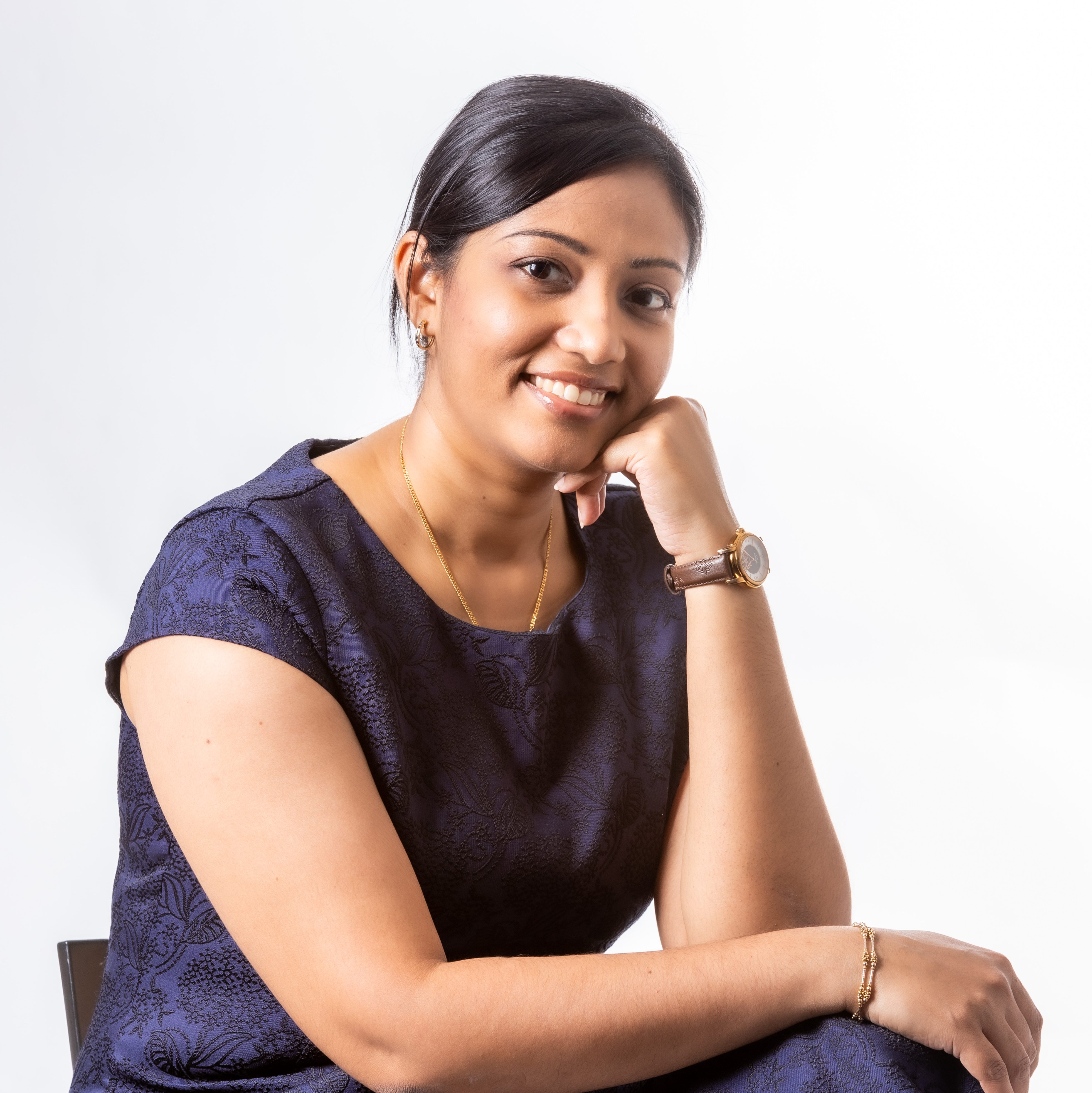
Welcome to Beamuse Designs— a creative space where curiosity meets intention. Here, ideas aren’t just shared; they are observed, interpreted and woven into stories that inform how we see, design and experience the world. Through reflective essays, visual explorations and design thinking, this site invites students, educators, makers and thoughtful wanderers to slow down, look again and think deeper about the connections between creativity, culture and practice.
Each post is a waypoint — a place to think, question and collect meaning — because good design starts with observation and ends with insight.
Let’s connect
Join the fun!
Stay updated with our latest tutorials and ideas by joining our newsletter.