
An ode to 10 years at INTI and the ever-changing palate of Subang Jaya.
Ten years is a long time to stay in one place. But somehow, working in SS15—Subang Jaya’s mini metropolitan—never quite felt stagnant. Perhaps because the pavements, alleys, and shophouses around INTI always seemed to be in a state of flux. And more often than not, this transformation was led by food.
When I first started at INTI back in 2014, SS15 was mid-way through a café renaissance. It felt like overnight, every other lot was suddenly pouring “handcrafted” coffee, doling out thick-cut toast, and pairing latte art with raw concrete walls. Artisan cafes mushroomed, each one trying to be the next Instagram darling. It wasn’t just the caffeine—it was the clink of cutlery, the hum of coffee machines, and the soundtrack of lo-fi jazz. ASMR, though not yet a buzzword, was alive and well in the ambiance of these cafés.

In-between classes and marking papers, I sipped my way through this golden era. But then came the froyo wave. Frozen yoghurt, or more endearingly, “Froyo”, exploded in popularity. Tutti Frutti was the pioneer of this chapter, letting patrons self-serve by the swirl and pay by the gram. It was yoghurt theatre at its finest. I happily jumped on that bandwagon, like many others, caught in the joy of toppings and tartness. But as with all trends, its reign was brief—melting away as quickly as it came.
Enter: the bubble tea boom. Now, this one had legs. It wasn’t new, of course—any pasar malam kid from the early 2000s would recall slurping on RM5 cups of chewy tapioca pearls. But in the mid-to-late 2010s, the drink rebranded. It became an experience. Names like The Alley, Gong Cha, Daboba, Xin Fu Tang, and Tealive turned boba into a lifestyle. The shops multiplied like mushrooms after rain. I remember walking down the street with a colleague, noticing yet another new outlet under renovation. Jokingly, I muttered, “I hope it’s not another bubble tea joint.” A man nearby—unbeknownst to us, the owner—overheard and asked why. I mentioned the saturation. Months later, the unit never opened. Coincidence? Perhaps. But we did count them, just for fun—27 bubble tea shops in one neighbourhood. A record of sorts.
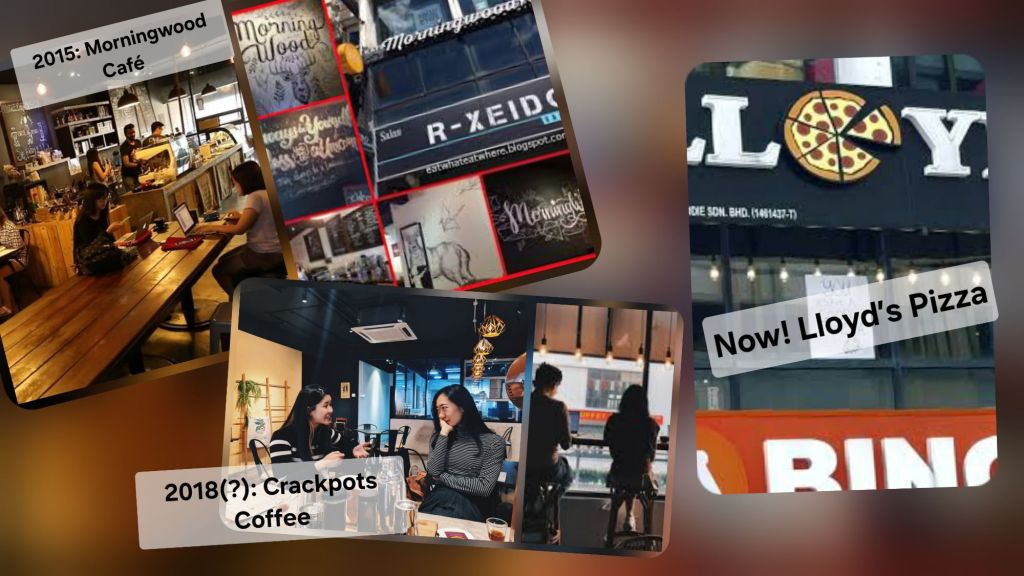
Somewhere between the froyo fade and boba takeover, the Morningwood Café opened its doors. A cheekily-named spot by Rueben Kang, Jared Lee, and Marianne Tan, Morningwood brought a youthful, creative charm to the café scene. It later changed hands many a times and was even a pasta joint before regaining a new life and being rebranded as Crackpots. Under new ownership, it became a favourite haunt of mine, thanks to its divine madeleines and exceptional coffee. The space evolved, much like SS15 itself. By late 2023, Crackpots relocated to USJ 1, and in its place now stands Lloyd’s Pizza, firing up slices where so many latte-fuelled afternoons once passed.
Post-pandemic, the tide turned again—this time towards wellness. Gen Z brought a new wave of health-conscious cafés and tea brands: Beautea, Koi Thé, and the ever-aesthetic Chagee ushered in an era of sugar-reduced, antioxidant-rich options. Aesthetic overdrive met functional beverages. Gone were the tapioca pearls; in came wolfberries and collagen jelly.
But SS15, ever the chameleon, wasn’t done yet. In 2023, something else started simmering—the Mee Tarik Cina Muslim craze. Pull noodles from the Chinese Muslim regions of China found a firm footing here. Their dishes were fragrant and hearty, but as a spice enthusiast, I must say the grilled skewers didn’t quite match up to the smoky charm of Balinese, British, or American marinades. Still, the novelty caught on.
Soon after, Nasi Lemak found itself in the limelight—again. Once a humble RM1.50 roadside staple, it became boutique. Fancy sambals, deluxe add-ons, and curated plating turned it into a premium dish. Shops began crafting an ambiance around it, leaning into vintage kopitiam vibes, while others went minimalist or rustic.
Then came the current chapter: hotpot. From China’s communal soup culture emerged Malatang—an entirely customisable broth experience where one selects their meats, veg, noodles, and condiments, all soaked in a fiery (fiery fires of hell spicy, if you like) or soothing broth. Whether dining in or taking away, it’s a two-hour affair that’s half-cooking class, half steamboat ritual.
In a way, this cycle of food trends mirrors our own shifts—our moods, our tastes, even our aspirations. Some trends faded quietly; others left lasting footprints. But through them all, SS15 thrived in its own chaotic, spirited way.
And perhaps that’s the charm—how a single street, tucked within the city’s sprawl, can hold a decade’s worth of flavours, friendships, and fads. In the end, this isn’t just about what we ate or drank. It’s about how the local tastebuds evolved with us. An outlandish optimism, if you will, that the next flavour will always be worth the try. Having said that, as I walk out for a next meal or snack, I do wonder what’s next for the streets of SS15.


 Beamuse Designs
Leave a comment