• A Christmas Blessing to all
  • Muse 5.0: 10 years of Creativity in Bliss

    Muse has been a long standing collective by ICAD that features the artistic side of the academic and non-academic staff of INTI Center of Art and Design, Subang Jaya. A platform to encourage creativity among staff and harness a sense of inspiration to students in their journey through creativity and design.

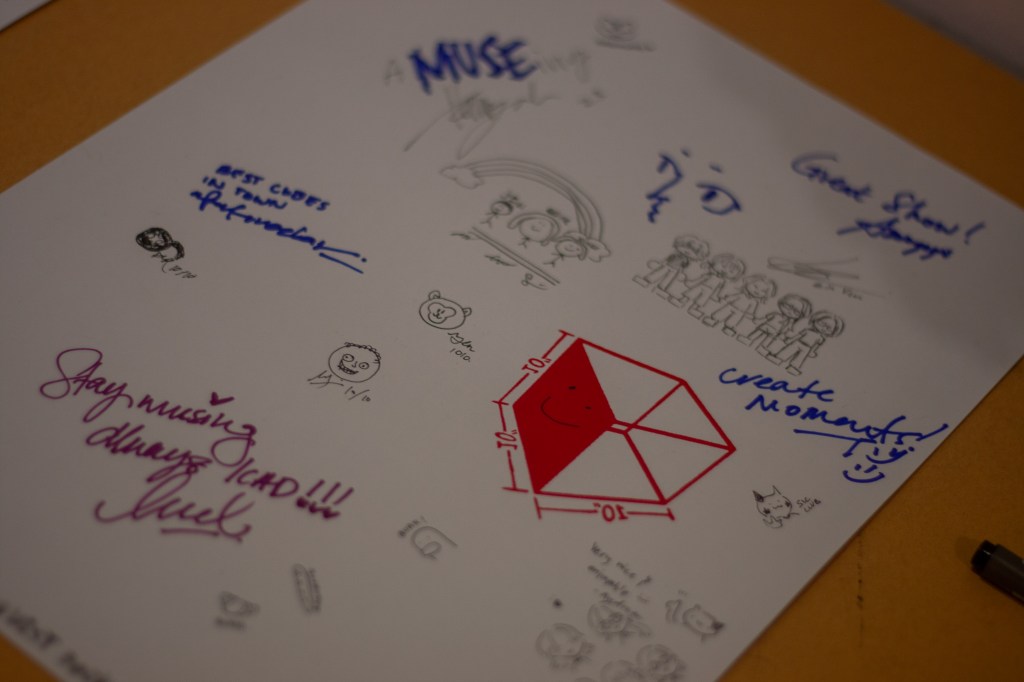
    This year, ICAD celebrates its ten-year anniversary and to mark this milestone, the curating team behind Muse initiated an exciting challenge for staff members. They asked artists to create their masterpieces within a 10″ x 10″ x 10″ space and in turn naming the exhibition TEN TEN TEN. This limitation serves as a catalyst for innovation, encouraging artists to think outside the box and push their creative boundaries.

    Joining us this year to officiate the exhibition was Professor Dr Mohd Fuad Arif (IG @fuad_arif) – a distinguished academic known for his profound expertise and remarkable contributions in the field. With his extensive research in the area of art history and unparalleled knowledge of various art movements, Dr Arif has garnered immense respect and admiration in both academic and artistic circles. It is an honor to have Dr Mohd Fuad Arif as a part of our esteemed event, and we are certain that his presence will elevate the exhibition to new heights, leaving a lasting impression on all those who attend. Together with our esteemed CE of INTI College Subang, Dr Jane Lim, and Ms Ang Tong Yin, Dean of ICAD, the exhibition was launched with a screen printing gig of the event logo.

    Works that were curated ranged from a ink sketches to mixed media experimentation that held a hidden story. Each work detailing its inspiration and story leading to its representation of 10 years growth in ICAD.

    The exhibition was available for the public viewing from the 10th to 19th October 2023 at Multipurpose Hall, Level 3, INTI International College Subang. So cheers to another successful exhibition till next one.

  • From Magic Illusions to Animation: Discovering the Secrets of Moving Images

    Have you ever wondered how moving images came to be? Before the age of the silver screen and digital animation, pioneers of entertainment relied on creative inventions to bring images to life. Recently, a group of curious students were encouraged to take on the challenge to explore some of the earliest magic trick tools: the magic lantern and the thaumatrope. By delving into the origins of animation, they gained a deeper understanding of the concept of moving images and even created their own flipbooks.

    Magic Lantern: Lighting it up

    The magic lantern, an ancestor of the modern-day projector, fascinated these students as it was a device developed in the 17th century. As this device employed a light source, lenses, and painted glass slides to project images onto a screen or wall, students were encouraged to create their own version using recyclable materials.

    Bring the lantern to live with some whimsical drawings on transparency sheet and the manipulation of light from a torch.

    With some in-class demonstration, the students carefully crafted a magic lantern from shoeboxes and tissue boxes. Each working delicately in tune to bring some interesting movements to life. By carefully manipulating their lantern, the students were able to witness the birth of animation, as still images came to life before their eyes. From whimsical drawings to animated stills, each projected image captivated these young ones, revealing the power of storytelling through motion. It became clear that the magic lantern served as an inspiration for future generations of animators and filmmakers.

    Diving into the Thaumatrope

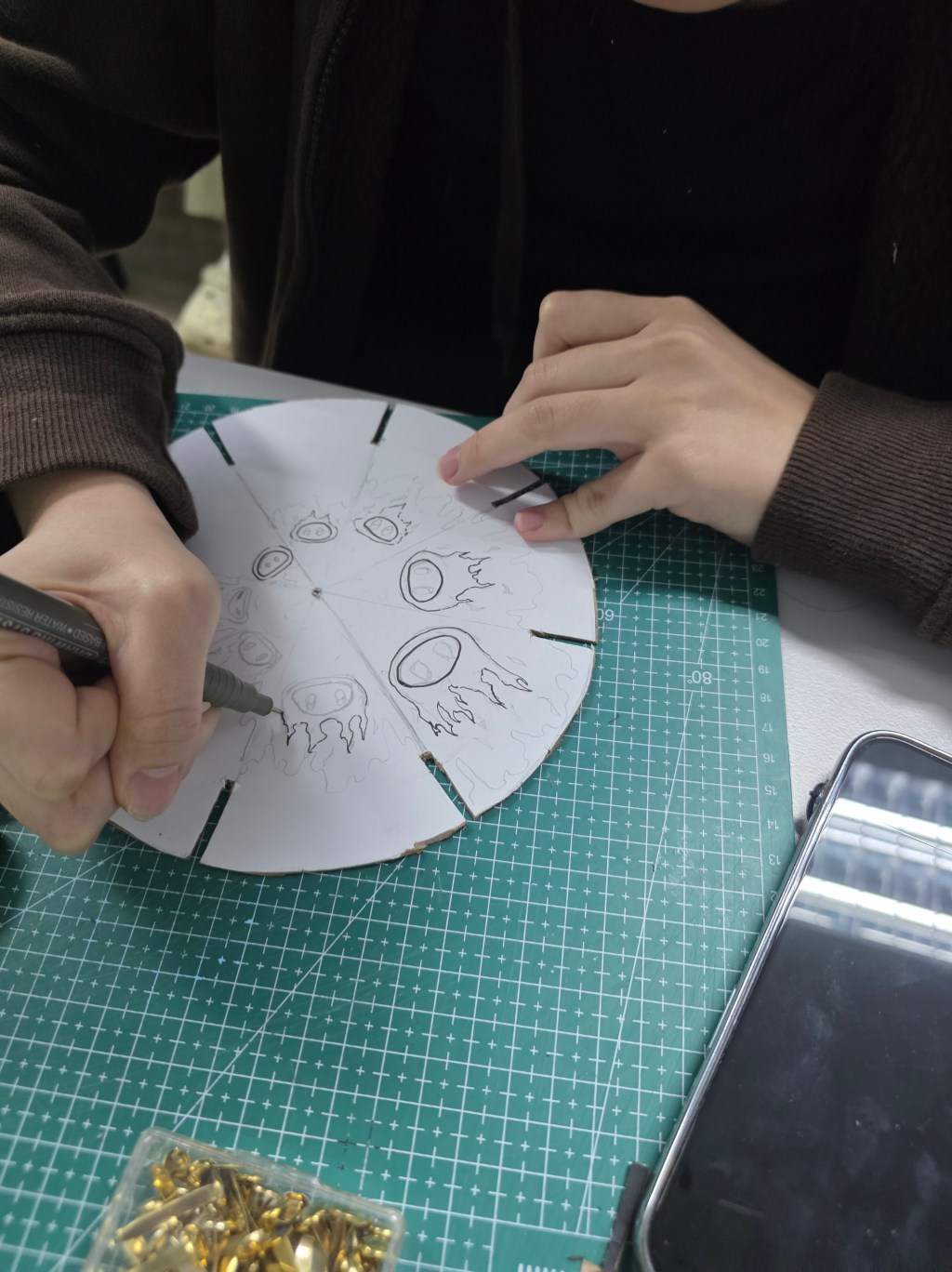
    As the students continued their exploration, they stumbled upon another inventive tool: the thaumatrope. This simple yet ingenious device hails from the early 19th century and comprises a disc or card with different images on each side. When spun rapidly, the two images appear to blend into one, creating a seamless illusion of motion.

    Once again, the students were guided into designing their own thaumatropes. Experimenting with various combinations, they discovered the captivating effects of merging two distinct images into a singular unified picture – a new term unlocked “Persistence of Vision”. The thaumatrope proved to be a stepping stone to the flickering frames of a typical flipbook, gently guiding the students to dive further into the realm of animation.

    Flipping their Flipbooks

    Armed with pencils, erasers, and stacks of paper, students were tasked to craft their sequential drawings, each page revealing a subtle progression of motion. Through this hands-on activity, the students experienced the thrill and challenge of animating frame by frame. They discovered the patience, precision, and creativity required to craft a cohesive narrative within the limitations of a flipbook. Each student’s unique style emerged, showcasing the boundless possibilities of personal expression through animation.

    Bridging the Gap

    Immersed in the history and techniques of the magic lantern and the thaumatrope, students experienced the evolution of moving images from simple optical illusions to the intricate art form it is today. They realized the enduring power of simple storytelling and the ability of animation to captivate audiences across centuries.

    By bridging the gap between the past and the present, these inquisitive students gained a deeper understanding of animation’s roots while nurturing their own creative potential. Armed with this knowledge, they are now poised to explore the vast realm of modern-day animation, inspired by the ingenuity of those who paved the way.

    In essence, this journey became a testament to the timeless appeal of animation, reminding us that even in our digital age, the magic of bringing still images to life continues to captivate and inspire us all.

  • #TrippingSingapore2022: Capturing Architectural Elements in Water and Colour

    In my #throwbackThursday, this long outstanding post on my short tripping to Singapore deserves some attention. Throughout the years, Singapore has been making headlines for its breathtaking skylines and modern environmental enhancements. The city-state’s futuristic architecture has become a symbol of its ambition and innovation. From the iconic Marina Bay Sands with its gravity-defying rooftop pool to the otherworldly Supertrees of Gardens by the Bay, Singapore never fails to amaze visitors with its cutting-edge designs.

    The blend of tradition and modernity in Singapore’s architectural landscape captivated me during my visit. Walking through the historic squares of Queen and Victoria str, I marveled at the intricate details of the shophouses and churches that have stood the test of time. These spaces were a stark contrast to the sleek skyscrapers that dominate the city’s skyline, creating a harmonious blend of old and new.

    During my trip to Singapore, I had a great time exploring the amazing structures at Gardens by the Bay. First and foremost, one of the highlights was the Supertree Grove, where I was in awe of the towering structures and the mesmerizing lights. Additionally, the botanical sculptures in the World of Plants were truly spectacular, showcasing the beauty and diversity of nature.

    Moreover, as I ventured outdoors, I couldn’t help but be captivated by the artistic sculptures that adorned the surroundings. All in all, it was a truly unique experience that left a lasting impression.

    From photos to watercolour sketching

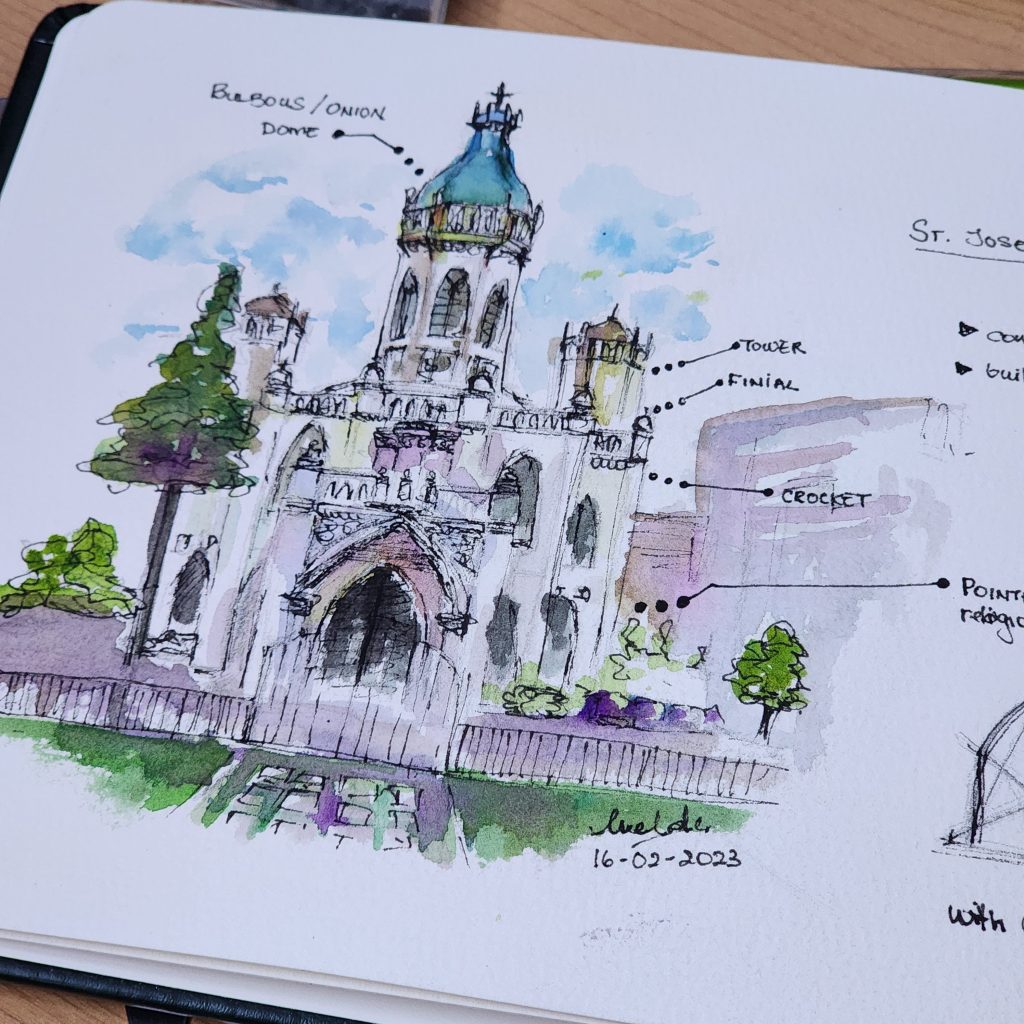
    A watercolour and sketch travel journal was started by me to document my experience and showcase the architectural wonders I witnessed. From the intricate patterns of the Gothic churches to the futuristic lines of Singapore’s Jewel, I aimed to capture and immortalize the various architectural marvels.

    Therefore, each page in this journal became a tangible representation of the architectural diversity that makes Singapore so unique. Moreover, every represented architecture not only shapes the physical environment but also tells a captivating story of culture, aspirations, and identity.

    That said, my travel journal is on its way to becoming a personal time capsule, preserving the essence of each architectural element and the joy of discovering history. This journey was inspiring enough for me to begin planning my travel stories around Malaysia as well so that when the years pass, I’ll be able to revisit these pages and be transported back to the moments when I stood in awe of these architectural masterpieces.

  • Craftsmanship Chronicles: From Molten Metal to Masterpieces at the Royal Selangor

    As someone who has always been captivated by the beauty and the historical significance of traditional and local craftsmanship, Royal Selangor Pewter comes to mind with high regard. Since childhood, pewter has been one of the oldest gifts that my family has received as a gesture of gratitude or appreciation. Many of these exquisite pieces now proudly grace our family display cabinet. That said, let me take you on a journey through the halls of Royal Selangor in Malaysia, sharing my personal experience along the way.

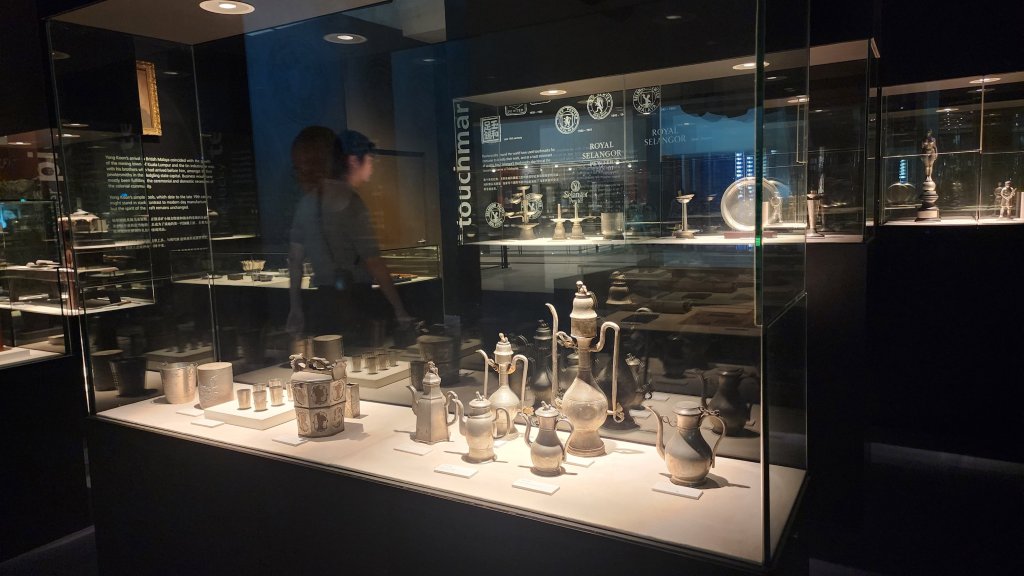
    Pewter bust of the founder – Yong Koon seating gloriously at their in-house museum.

    Royal Selangor Pewter established itself in 1885 when the founder Yong Koon came to Malaysia from China and started handcrafting pewter objects that were mainly used for ceremonial purposes. In the very heart of Kuala Lumpur, he started his quaint little shop – Ngeok Foh in Hakka, and Yu He in Mandarin Pinyin (translated meant Jade Peace).  Pretty soon, with the arrival of the British in Malaya, products were expanded, however, due to family feuds the four sons of Yong Koon split the pewter business into Selangor Pewter, Malayan Pewter, Tiger Pewter, and Lion Pewter. However, as our wonderful guide of the day, Poh shared, it was only the Selangor Pewter, which was run by Yong Koon’s third son – Yong Peng Kai that survived and was eventually endorsed in 1992 by the then Sultan of Selangor, Sultan Salahuddin, and its name became Royal Selangor (dropping the pewter name to pave room for expansion to other products with other materials).

    Pewter bust on display at the factory of Peng Kai.
    The touchmarks were created from the time Ngeok Foh was founded.

    Taking a walk down memory lane, Poh not only shared the beautiful history of Royal Selangor but also showed some intricate masterpieces that were used as the early form of currency in Malaysia – Tin money.  Throughout the 15th to 18th centuries in the states of Selangor, Perak, and Negeri Sembilan, tin money or otherwise known as animal money was used as a means of exchange. These were commonly seen in the forms of crocodiles, tortoises, beetles, and various types of birds. Another form that came later in history was the pohon pitis (money tree in English) – inspired by the Chinese traders. The only difference one could spot was the Arabic inscriptions as opposed to the traditional Chinese characters.

    Tin money: Poh explains the early form of Malayan currency and the iconic money tree.

    Among the many artifacts that sit in this space, the most alluring of them all was the melon teapot that took the spotlight for saving a life. Legend has it that “During World War l, Ah Ham recklessly raids warehouses in a desperate attempt to find food. As he reaches down to retrieve the melon-shaped teapot on the floor, he hears shrapnel whistle past just above his head. The teapot saved his life! Soon after,
    he regaled his friends with his wartime stories
    and how the teapot helped him cheat death.
    The teapot is an original by Yong Koon, stamped
    with his yu he zu xi touchmark. It takes pride of place in the Royal Selangor archives.” Henceforth being dubbed the Lucky Teapot.

    Royal Selangor has grown a lot over the years. They have even been recognized by the Guinness Book of Records for having the world’s largest pewter tankard. You can find their products in stores all over the world, including well-known ones like Harrods and John Lewis in the UK. They have also acquired Comyns, one of the oldest and most prestigious silversmiths. Royal Selangor owns a rich collection of over 35,000 historical molds, tools, patterns, and drawings that showcase different art movements throughout history – such as Baroque, Rococo, Neoclassical, and Art Nouveau. Not forgetting their longstanding relationship with Selberan, another pioneer in fine silverware in Malaysia.

    The Wall of Hands

    Walking down the halls of Royal Selangor to the factory, I couldn’t help but be filled with a sense of nostalgia. As there it was—a wall dedicated solely to the amazing employees who had selflessly poured their hearts and souls into their work. The Wall of Hands is made entirely of handprints belonging to the employees of Royal Selangor who have worked a minimum of 5 years. There are approximately 940 handprints to date. The wall stands as a testament to the bonds formed within the company, the friendships forged through shared experiences, and the collective pursuit of excellence. It showcased the rich tapestry of talents and personalities that made Royal Selangor the distinguished brand it is today.

    Getting-in-on it hands-on!

    Now that we are done with touring, it was time to get our aprons on and get those muscles moving! Royal Selangor offers two workshops for her visitors to get an immersive experience on a smaller scale of what they have seen in the factory.

    First up is The School of Hard Knocks, and as titled, there is a lot of knocking going on here. We were lucky to have a fantastic instructor – Mr. Hafiz to guide us through. For the price of RM 75, you can knock your heart away and make an ice-cream bowl. Within this workshop, you will be guided in knocking the tin plate into a bowl. It can be a tedious job if you do not pay close attention as you might end up hammering your own fingers in the process or twisting your wrist from hammering too hard.

    School of Hard Knocks experience

    Start of by metal stamping your name to the bottom of the plate.

    Hammering the plate into a bowl using the mould provided.

    Once done, each participant takes home a certificate of completion, their “knocked” ice-cream bowl and the apron.

    Next up is the molten tin and mould experience with The Foundry workshop. Here you get to experience creating a pewter accessory from scratch for the price of RM180 and once again under the guidance of Mr Hafiz, we got a chance to create using moulds and freehand. Firstly, gear up! Protection first with your apron and gloves as the pewter jar is hot at heated at approximately 250 celsius. Next up, choose from the preset rubber moulds and affix it to the clamps. “Not too tight,” said Mr Hafiz as the molten needs to get into the small crevices and quick as pewter solidifies pretty easily. Then once casted, all we need to do is set it aside until it cools down before we can remove it from the mould. This process takes about 3-5 minutes long and seeing as the workshop duration is an hour, one can cast and recast as many time till you are satisfied. Once that is completed comes the finishing where you will do a scotching and buffing to polish your creations. Finally, you will wash it with some thinner to remove the black stains from the polishing process before bringing it back to Mr Hafiz for some extra TLC finishing.

    Crafting without the aid of templates was an entirely different experience altogether and, Mr Hafiz made it appear effortless. The reality hits you like a thunderbolt when you start to experiment on your own as it posed quite a challenge. However, creating something from scratch became addictive, and I couldn’t help but crave for more opportunities to engage in the art of pewter-making.

    Freehand sculpture created during The Foundry Workshop

    Overall, this is one experience that I would encourage everyone to take some time off to try and indulge in. You can make a purchase for the workshops via Royal Selangor Visitor Center site or like me, (collect points and) make a booking on Klook. And, if you do go there or have been there, share your tell with me too!

    Explorers at work: Myself (center) with Song Yann (left) and Afeef (right) after the hammering session. Photo credits – Mr Hafiz.
  • Tracing the Influences: A Visual Diary Journey Through the History of Art and Design

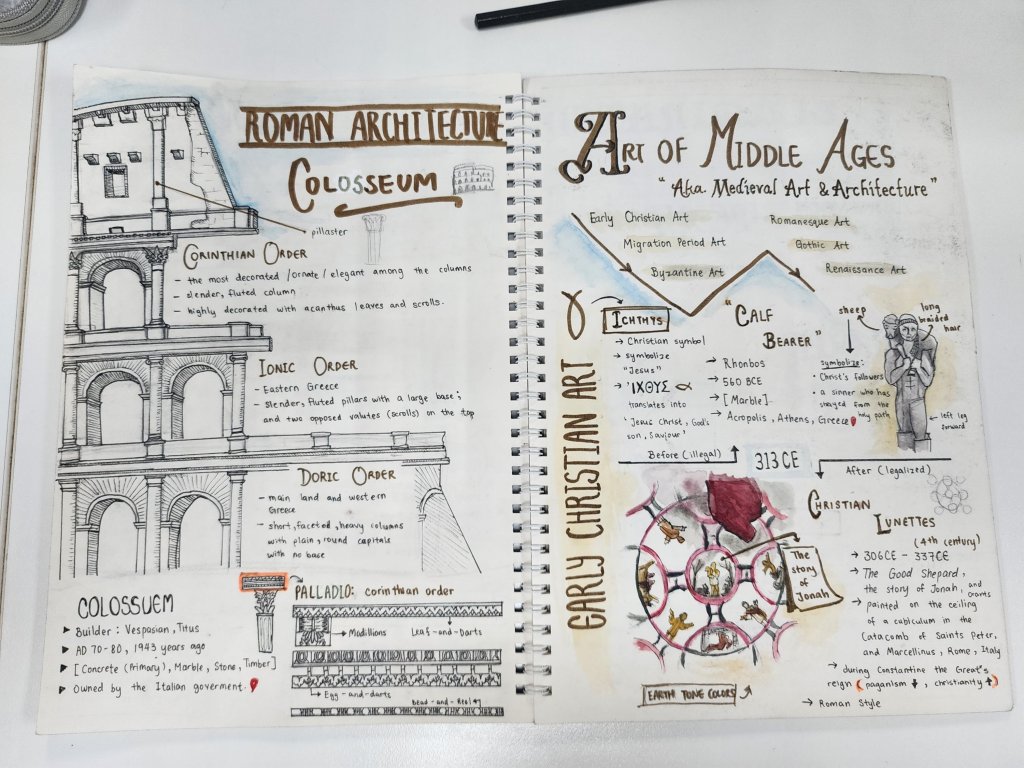
    The journey through time in exploring the beautiful history of art, design and architecture is not just captivating – it is a journey of enlightenment as you begin to see the culture, heritage and influences that has been set in stone (or canvas). That said, inspired by a former lecturer’s work from PJCAD, I decided to explore and introduce to the (ICAD) Foundation in Design students the transformative learning tool of a “visual diary.” This post will focus on my exploration of using the visual diary in a classroom setting as a form of conceptual learning through stimulative research.

    Student reflecting on the Realism artists and makes brief analysing on Millet’s The Gleaners.
    Credit: Andrea Khor

    The concept of the visual diary lies in its aim to be a conduit that links historical landmarks of human expression. We see this embedded throughout time in cave paintings and into the pristine beauty of Greco-Roman classicism. Each art period and movement tells a story of its own while making its mark and contributing to modern society. With this in mind, and while noting on the course learning objective of “describing the characteristics of the Western and Eastern art and design styles from ancient to early 20th Century“, students were guided into making a collective of their own.

    To make a visual diary, I have to deeply understand and analyse the art movement. So, I have to research through websites and other online platforms, which helped me to know better about it.”

    Extracted from the student survey responses.

    Kickstarting with the first form of learning strategies is active learning in the classroom – students are introduced to each period or movement with a lecture and are encouraged to be engaged in active participation by observing and identifying some of the defining characteristics in each masterpiece. Each student is given a chance to share their thoughts through in-class verbal discussion. With this creating room for debate and motivating others to raise questions on varied topics ranging from theme to medium and tools.

    As the weeks passed on, each page was filled with overlapping artistic representations hailing from the various periods – Gothic art, Renaissance, the Baroque period, industrial design revolution and post-modern architectures were penned in exploration and colour. The study analysis explored and gave a deeper insight into the design elements and characteristics that define the movement or period in its art or architectural form. This applied practice is referenced as visual learning – wherein the diary approach taps into the visual learning style. The engagement stimulates the student into creating sketches and footnotes to aid them in strengthening their independent study approaches on artworks, architectures, and sculptures.

    In a survey conducted, one student noted, “the form of mind map to mark the key points corresponding to each knowledge point in order to improve efficiency when reviewing.” A statement that displays the student’s practice into the third applied learning strategy – reflective learning. Each exploration, the learning moves the students beyond the passive consumption of information and demonstrates active engagement into each topic more thoroughly. Here in the following photo, we see the pages extracted from the student’s visual diary, a display of how the information collated and later experimented into his own interpretation of what had been illustrated being reanimated.

    (Left) Student’s exploration in creating a Political Sketch inspired by Daumier (Realism Art Movement);
    (Right) Using Van Gogh’s technique to recreate a still life artwork. Credits: Oscar Leow

    By encouraging students to create their own recreations that are inspired by some of the key artists or movements, the student delves into their creative and experiential learning aspects as it enables them to explore their artistic skills, creative thinking and apply what they learn in a practical manner. As seen in the example above, the student has harmonised the characteristics of the movements and exported it into a localised and creative expression.

    “When trying to draw and structure different types of history architecture throughout different times and cultures, helped me appreciate the uniqueness of each specific art design and it’s said period.”

    Extracted from the student survey responses.

    Needless to say, the incorporation of various learning strategies has resulted in aiding the students to understand the complex interweaving of art periods; the evolution of design, and the creative transformation of architecture while expanding a skill of remembering in preparation for their final exam. In essence, the visual diary is not just a tool but an amalgamated testament of creative expressions and learning strategies to develop critical thinking skills and foster a deeper appreciation of art and design history.

  • DIGITAL ART: Where did you come from? Where are you going?

    In recent news, artificial technology has been revolutionizing various forms and disciplines. Taking an in-view into the world of art and design, we see a transformative evolution from handprints on cave walls to generative AI art. Hence, this article explores the influences and impact of artificial intelligence in art and design.

    Although it is known to many that digital art took to the stage in the 1980s globally, an article in Artland Magazine caught my attention when the author, Lucija Bravic, mentioned that the origins can be dated to the 1960s when some artists began experimenting with using machines alongside various other techniques. Artists such as Frieder Nake and the group E.A.T. (Experiments in Art and Technology) presented an array of early prints that were generated using algorithms to produce different layouts of shapes and elements coupled with various themes to create multiplicity.

    Polygon Drawing (1965). Frieder Nake. MutualArt

    Taking Frieder Nake as an example, we see him labeled as a Polygon Drawing Artist as he was a mathematician and computer scientist by trade who sought to ‘rationalize art by developing objective scientific measures for aesthetic experience’. (Artsy) In 1963, Nake created the first formula to generate art with the aid of the early computer graphics program and various programming languages. The above print was one of the three pieces Nake exhibited in his first solo exhibition. Also known as Hommage à Paul Klee, the print was constructed using algorithms and a plotter to generate random polygons within a confined space. This calculation generated a unique composition each time the algorithm was run. Nake’s explorations opened and created new avenues for “new media art” and its further explorations.

    The term “Digital Art” came into during the 1980s when an artist named Harold Cohen collaborated with a group of computer scientists, created a device called AARON to serve as one of the earliest painting software with artificial intelligence. In an article found on Artplacer, AARON is described as a ‘robotic machinery that was programmed to create drawings on large paper sheets placed on the floor’.

    Interestingly, as we can see, Cohen had foresight into our time and age where digital art would be expressed through the aid of AI. However, unlike our today’s tools, such as DALL-E and Midjourney, the output of AARON was much different as the device was equipped with a robotic arm to produce “drawings” in the real world. That said, over the years countless forms of digital art have emerged such as digital painting, 3D illustrations, and much more. All of which were inspired by the boom created by Cohen.

    Through these advancements came technology that has greatly expanded the world of digital art. We have essential tools to aid that include Adobe Creative Cloud, Corel Painter, and GIMP; and, there are many more in the arena. Each rose with the invention of the computer and added to that people were now exploring the idea of digital animation and other forms of experimentations. Now digital art could be imitated in various forms – traditional painting, digital air-brushing, 3D sculpture, and by the 2000s when we could be connected globally with the aid of the Internet came cross-sharing platforms that allowed artists to share their work, collaborate and receive critique!


    Did You Know that Adobe Photoshop was first released in 1988 and since then has become an industry standard for digital image editing and manipulation. It was followed by Corel Painter which was released in 1989 and gave the ability to simulate traditional painting techniques such as oil painting, watercolor, and pencil sketching, on a computer.

    – Mark Anderson (2023), World Art News

    Today, as Anderson writes in the World Art News, “digital art has become a global phenomenon” as digital tools and technologies have expanded the genres of art we see in art fairs and shows to include video art, installation art, and interactive art. The future of digital art is ever-growing as we even see “new players” like augmented reality (AR), virtual reality (VR) and Artificial Intelligence (AI) art-making waves to reshape the scope of what is and what could be.

    NFT Artist making a mark in the world of Digital Art today. Source: Arts.com.my

    Added to that NFTs have revolutionized the way artists can monetize their work and authenticate its uniqueness. By leveraging blockchain technology, NFTs provide a secure and transparent method of buying, selling, and owning digital assets. This has opened up new opportunities for artists, allowing them to directly connect with collectors and establish value for their digital creations. Moreover, the rise of NFTs has sparked conversations about the ownership, copyright, and the very nature of art in the digital age. It is undeniable that NFTs have had a profound influence on the art world, reshaping traditional models and paving the way for a new era of digital creativity.

    As the worlds of digital art, generative AI, and NFTs continue to evolve, it remains to be seen what lasting impact this new era will have on the art world. Will these technological advancements democratize access to art and empower a new wave of creators? Or will they amplify existing inequalities and further entrench the dominance of certain players? Only time will tell how history will judge this pivotal moment in the intersection of art and technology.

  • A #ThrowbackThursday2022: Art Horde hits National Art Gallery

    It is a rare occurrence when colleagues unite and decide to bring students to an art gallery. Equally uncommon is the sight of the National Art Gallery being overrun by a large group of students. One of the most notable events that took place at NAG, KL, in the year 2022 was the Australian ‘Walking through a Songline‘ digital immersive design exhibition. This exhibition was a celebration of Australian Indigenous arts, culture, and creativity, and left a lasting impact on all who experienced it.

    Walking through a Songline is referred to as a pop-up digital experience based on the indigenous arts and culture and it brings to life the Aboriginal story of the Seven Sisters – seven sisters who represented the constellation starts, Pleiades. As such, through the unique blend of captivating visuals and mesmerising sounds, each one of its visitors is transported into the illuminated world of narrative storytelling.

    Source: instagram.com/icadmedianews

    For History of Art and Design with the Certificate in Design students, it was an exploration into the traditional forms of Aboriginal art and how art can be transformative into a different form of storytelling while preserving in the heritage symbolisms and cultural nature of the Australian Aboriginals. Therefore, as part of their discovery and explorations, the students were expected to creatively design and present in a print design format – brochure, mini handbook, flyer or etc. As such, it allowed students to also create a deep appreciation for diverse cultures and arts and in turn for me as an educator, a chance to witness their ability to synthesize their findings into print design format efficiently and creatively.

    Some of our ICAD students admiring and observing the local features.

    Nonetheless, as we are already at the National Art Gallery KL, it would be a loss not to spend a little extra time observing and indulging in some of the masterpieces by our very own Malaysian artists. These curated masterpieces classified as stated on the National Art Gallery’s official website are the National Permanent Collection Exhibition titled Nusa – derived from the Malay word that translated means motherland or homeland in English. Each piece presented responds to some of the well-known narratives of historical, mythological context in the identity of Southeast Asia.

    Sculpture by Khairul Azmir Shoib @Meme

    Adding on, it was a pleasure to indulge in some of the other galleries and, in particular, one hall exhibiting artifacts and maps that narrated some historical origins of the famed state (and my hometown), Malacca. It was an engaging experience as there was a projection mapping, recounting one of the historic travels by ship by Ferdinand Magellan. Looking around, it was indeed an exploration of diverse narratives to pique one’s interest not in the fields of arts but to discover something old in the modern world.

    Overall, through the immersive displays and captivating narratives, this trip was definitely an experience that reaffirms the necessity to instill outside-classroom experiences to merge theory and practice, and, ultimately train students to be well-rounded Designers who are both culturally sensitive and creatively empowered.


  • Unboxing Animations’ secrets with the wizardry of QR and Zines

    Teaching history of any kind can sometimes draw death closer as it can get boring, so I decided to amp it up a notch, especially since it was History of Animation for students in our Diploma in Immersive Design. Rather than taking the easy route of preparing an infographic board, I challenged my students to add QR codes to their creative zines.

    The creative zines that the students crafted

    Throughout the semester, students explore the historical background and evolution of magic tricks into animation as it is today. As they are geared towards the line of immersive design, they were encouraged to explore the mechanics and engineering techniques of the various animation styles. Added to this, at several points they were also challenged to create some optical toys, names the zoetrope and the phenakistoscope using recycling materials. By travelling through time to some of the key moments in animation history, students were able to gain a comprehensive understanding of the evolution of traditional tools to ground-breaking computer-generated animation.

    To gauge their understanding, students were tasked to conduct a case study on a feature animation film of their choice. Added to this, a 5-year cap (2019-2023) was set for students to narrow down their study into feature films to be in line with newer applications and techniques. The observation and analytical process is crucial as the students not only delve into the storytelling process but take a deeper dive into the frame-by-frame sequence. As an example, I initiated an in-class discussion using Kubo and the Two Strings (2016) and Red Shoes and the Seven Dwarfs (2019). Both animated films are categorized as 3D however, the animating techniques and the symbolic elements used were completely different making each unique to its audiences.


    Example analysis in basic

    Kubo and the Two Strings (2016)

    Source: Summer of the Arts

    Animation Technique: Hybridized stop-motion, where Laika Studios (America) created their own puppets using recycled mechanized parts.

    Observations: Strong representation of good versus evil through the application of light and shadows. Protagonist characters have brighter hues while the antagonist have darker hues this is an exception for the beetle character.

    Symbolisms: One, idea of loss represented in Kubo’s missing eye. Two, the shamisen with two strings refers to the two influential persons in his life – his parents. Three, the third string that comes towards the end represents Kubo himself.

    Red Shoes and the Seven Dwarfs (2019)

    Source: IMDb

    Animation Technique: 3D computer animation techniques and produced by Locus Creative Studios (S. Korea)

    Observations: Revised Hans Christian Fairytales – Red Shoes is a hybrid of Cinderella (the shoes) and Snow White (damsel in distress chased by the Evil Queen); and, the Dwarfs takes inspiration from Shrek.

    Symbolisms: The entire feature film focuses on the breaking the idealistic views of what beauty should be. One, the red shoes represents the idea of inner beauty being revealed yet on another hand, reveals an unrealistic view as the wearer looks slimmer when wearing the shoes. Two, the dwarves who are really princes under a curse symbolizes the society judgement based on appearances.


    Through the process of gathering information and deconstructing the animation techniques and symbolisms within an animated film, students were able to closely examine and analyze the impact of visual storytelling and identify the strengths and weaknesses of their selected films. This was encouraged to be conducted individually and each presented in an academic essay format (fostering the idea of conducting a research, and referencing to strengthen ideas and concepts). From here, they will gather their reports and initiate a group discussion while comparing which will be best presented into a visual format. Additionally, they get to explore the layout and composition to effectively disseminate the information using the key elements and characteristics of their chosen animated films.

    Student presenting with his team their findings on Tom & Jerry the Film

    The zines acted as an interactive medium. Therefore, high caution is needed in planning the layout and composition using the design principles, especially the use of hierarchy in design. Adding on to supplement their findings, students were encouraged to explore the possibility of embedded AR triggers and/QR to provide readers with behind-the-scenes content or Easter Eggs that they had uncovered through their analysis and observations. By utilizing the use of QR codes, students were able to discover other means of sharing presenting research and for the readers, enriching their understanding on the shared feature animation film.

    In conclusion, through various activities such as case study analysis, observational analysis, and zine designing, students have gained valuable insights into the field of immersive design. This journey has not only inspired them but also equipped them with the necessary tools and knowledge to excel in this exciting discipline. Overall, history of animation has served as a solid foundation for their future endeavors in the immersive design industry.

  • Kagape 2023: East Malaysian fusion of Faith and Culture

    Ka – Ga – Pe

    Kaamatan (Sabah), Gawai (Sarawak), Panen (Indonesia)

    The combination of jiggling and rattling of shimmy belts resounded in the air as the pews of the Church were filled with the vibrant and diverse colours of our East Malaysian and Indonesian brethren. The Church of Holy Redeemer, Klang, embraces the unique harvest festival, as well as the Kagape ceremony, showcasing the rich East Malaysian culture within the Catholic faith.

    From dumplings at Chinese New Near to ketupats at Raya and biryani at Deepavali to roasted turkeys at Christmas, we Malaysians definitely revel in our multicultural traditions and food. However, we tend to overlook the lesser known celebrations such as the Pesta Kaamatan celebrated in Sabah and Gawai Dayak celebrated in Sarawak. These are the harvest festivals celebrated annually Kadazan-Dusun and Murut communities in Sabah and the Dayak communities in Sarawak. Interestingly, it is a time to give thanks to Bambaazon, the Kinoingan (Supreme God), for a bountiful harvest and to pray for continued blessings. Traditionally, the celebrations involve a series of rituals followed by cultural performances to foster unity and strengthen cultural ties while keeping preserving the cultural heritage. Adding on, we also celebrate the Panen festival – an Indonesian harvest festival unique to certain regions in Indonesia was also celebrated.

    The East Malaysian Parishioners of Church of the Holy Redeemer, Klang. Source: Facebook

    East Malaysian culture in the Catholic Mass

    The celebration began with the ceremonial Ibanese dance, the Ngajat – a dance traditionally known to welcome warriors home from battle but in modern times to welcome guests to the longhouse. Here it was to mark the start of the liturgical mass and to welcome the Entrance Processional to the Altar. Although,, the Ngajat dance is not a regular part of the Liturgical Celebration, it was incorporated with special permission being a cultural celebration and was carefully integrated into the Mass to ensure that the reverence and worship to the Blessed Sacrament is maintained. Throughout the Mass, sacred hymns were sung in Malay and other dialects such as Kadazan-Dusun and Bidayuh.

    The Ngajat dance to welcome and escort Fr. Andrew Kooi to the main table

    Once the Mass had ended, the congregation present were welcomed to partake in the Kagape ceremony. This was the star highlight of the day as Kagape, which means “feasting together” refers to coming together to join in a sacred meal as an expression of gratitude to God – a symbol of unity and community. During the Kagape, it is the traditional dishes and delicacies of East Malaysia that takes centerstage and introduces people to the tantalising aromas and flavors to tease your sensory experiences.

    Overall, this unique celebration is a testament to Malaysia’s colourful multicultural heritage and its union with the Roman Catholic Church in Malaysia in fostering communitarian relationships while preserving beauty and heritage of our East Malaysian indigenous brethren.