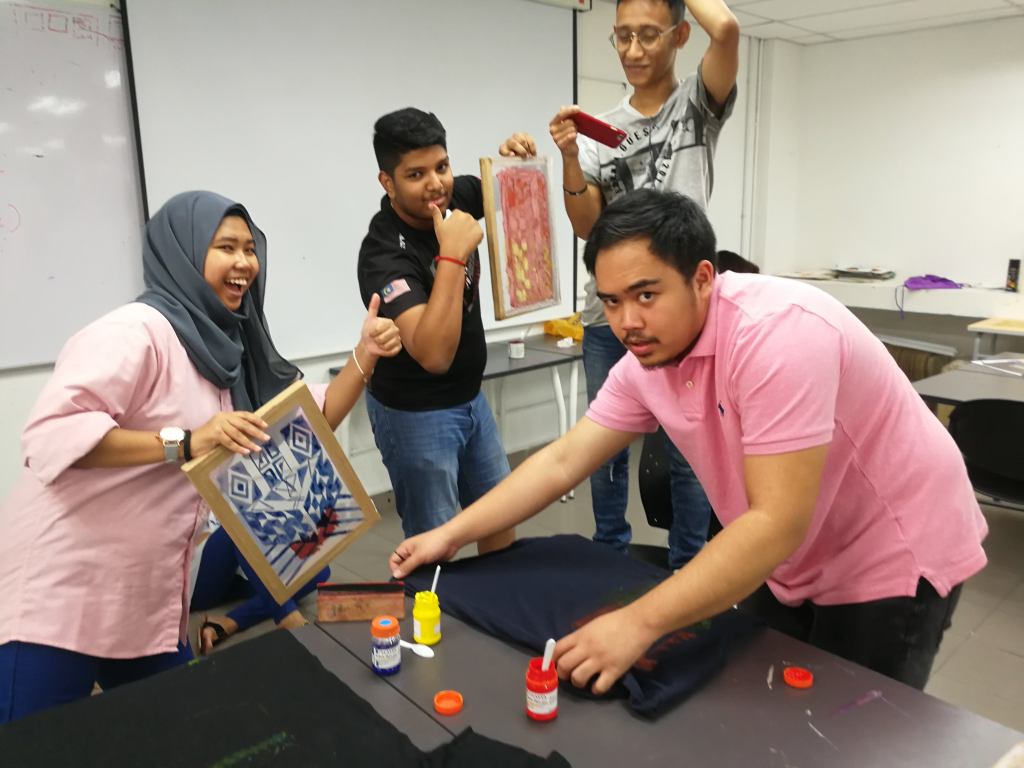
Working with students can all terrifying, exhilarating and most importantly, full of laughter.
 A couple of weeks ago, I decided to explore an alternative method for Silkscreen Printing. Here is a little introduction to What is SilkScreen Printing? This is a technique also known as Screen Printing that was made popular in the late 18th century. History has it that this technique first appeared in Asia in the 900s. It is a hand-printing technique that as the name suggests uses a screen made of mesh that has been stretched over a frame and upon which a design would be placed for printing with various colours.
 Traditionally, you would expose the screen with UV lighting to create a positive-negative effect. The negative area is where the the ink will fall through. The actual process can take up a day at least with the use of various chemicals and steps.
 That being said, the alternative method uses a gel-like substance that is directly drawn onto the screen. I used products from Daler Rowney (to be honest, there are a lot of other options – for instance, Speedball but in most of my works, I tend to be swayed to using Daler Rowney). As I was saying, the gel-like substance is called Screen Drawing Fluid from the System3 Series and this is coupled with the Removable Screen Block. Both of these are the essentials to creating a good alternative to silkscreen. Added to it is sheer patience as you may very well not achieve it in your first few tries.
Therefore, enjoy the video above and do share if you are ever going to try this technique!
#silkscreen #alternativesilkscreen #dalerrowney #screenprinting #andywarhol



 Beamuse Designs
Leave a comment